




Starting a business is an exciting leap, but turning an idea into a viable company often depends on access to capital. For most founders, securing a startup loan is one of the earliest and most important financial milestones. Yet startup loans are also among the most difficult forms of financing to obtain.
Unlike established businesses, startups lack historical financial data, predictable cash flow, and proven operating performance. Because of this, lenders apply stricter scrutiny when evaluating loan applications from new ventures. Understanding what lenders truly look for can make the difference between approval and rejection.
This article breaks down the real criteria lenders use when approving startup loans and explains how founders can strengthen their applications with preparation, credibility, and strategic planning.
Understanding the Risk Behind Startup Lending
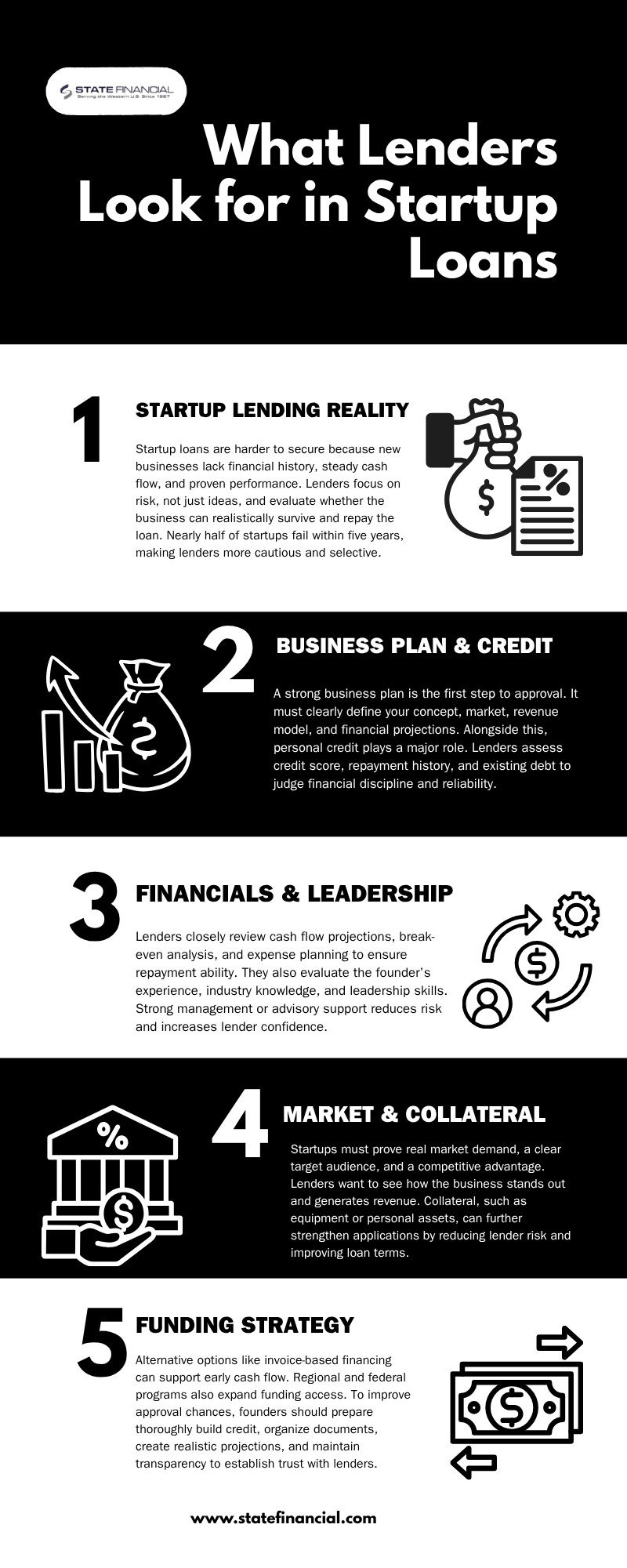
Lending to startups inherently involves higher risk. According to U.S. Small Business Administration data, nearly half of all startups do not make it past their fifth year. These statistics heavily influence how lenders assess early-stage businesses.
Lenders are not just funding an idea. They are assessing the likelihood that the business will survive long enough to repay the loan. This is why startup loan approvals focus less on optimism and more on structure, discipline, and risk management.

A Detailed Business Plan Is the First Filter
A comprehensive business plan is often the first document lenders review. It provides a structured overview of how the business will operate, compete, and generate revenue.
An effective business plan should clearly outline:
- The business concept and mission
- Target customers and market size
- Competitive positioning
- Revenue model and pricing strategy
- Operating structure and staffing
- Financial projections and funding requirements
Lenders use this document to evaluate whether the business idea is viable and whether the founder understands the realities of running a company. A vague or overly ambitious plan raises red flags, while a realistic and well-supported plan builds confidence.
Personal Credit History Plays a Central Role
For startups without business credit, lenders rely heavily on the founder’s personal credit profile. Personal credit history helps lenders assess financial responsibility and repayment behavior.
Most lenders review:
- Credit score
- Payment history
- Existing debt obligations
- Credit utilization
- Any past defaults or collections
A strong personal credit profile signals reliability and discipline. Even when alternative financing options are available, personal credit still influences approval terms, interest rates, and loan limits.
Founders with weaker credit can improve their chances by reducing outstanding debt, correcting credit report errors, and demonstrating consistent on-time payments over time.
Financial Projections and Cash Flow Planning
Startups rarely have stable revenue in their early months, so lenders focus heavily on projected cash flow rather than current income. Financial projections show whether the business is expected to generate enough cash to meet expenses and loan repayments.
Lenders typically look for:
- Monthly revenue forecasts
- Operating expenses
- Net cash flow projections
- Break-even analysis
Studies show that poor cash flow management is one of the most common causes of small business failure. Startups that clearly understand their cash needs and timing demonstrate a higher level of financial maturity.
Management Experience and Leadership Capability
Lenders do not fund ideas alone. They fund the people responsible for executing them. Founder experience and leadership ability are key factors in startup loan approvals.
Relevant experience can include:
- Industry knowledge
- Previous entrepreneurial ventures
- Management or operational roles
- Financial or strategic expertise
A strong management background reduces perceived risk. If founders lack direct industry experience, lenders often want to see advisors, partners, or mentors who bring complementary skills to the business.
Market Demand and Competitive Strength
A startup must demonstrate that there is real demand for its product or service. Lenders want evidence that customers exist and are willing to pay.
Key elements lenders evaluate include:
- Market size and growth potential
- Customer demographics
- Competitive landscape
- Unique value proposition
Startups that clearly explain how they solve a specific problem and why customers will choose them over competitors are more likely to be viewed as sustainable and fundable.
Collateral and Security Considerations
Collateral reduces lender risk by providing assets that can be recovered if the loan is not repaid. While not always required, collateral often improves approval odds for startups.
Common forms of collateral include:
- Equipment
- Inventory
- Real estate
- Personal assets
Secured loans generally come with better terms than unsecured loans. Lenders view collateral as a sign that the founder is invested in the business and willing to share risk.
Alternative Funding for Early Cash Flow Support
Traditional loans are not always the right solution for startups, especially those that sell to other businesses on delayed payment terms. In such cases, alternative funding models can play a strategic role.
Some startups choose to work with an accounts receivable financing company, which provides funding based on unpaid invoices rather than long operating history. This allows businesses to access working capital while waiting for customers to pay, without taking on traditional long-term debt.
This type of financing is often used as a supplement rather than a replacement for startup loans.
Regional Lending Factors and Local Opportunities
Where a business operates can significantly affect financing options. State-level programs, regional lenders, and local economic initiatives influence approval criteria and loan availability.
Entrepreneurs seeking small business loans California may benefit from state-backed loan guarantees, industry-specific funding programs, and innovation-driven incentives. These regional resources are designed to support business growth and economic development.
Understanding location-based funding opportunities helps startups align their applications with the priorities of local lenders and agencies.
National Lending Programs and Federal Support
Beyond state programs, federal initiatives play a major role in startup financing. Government-backed lending programs reduce lender risk and expand access to capital for early-stage businesses.
These programs strongly influence the availability of small business loans USA, particularly for startups that may not qualify for conventional bank financing. While documentation requirements can be extensive, benefits often include longer repayment terms and competitive interest rates.
Industry Risk and Business Model Evaluation
Different industries carry different levels of perceived risk. Lenders consider factors such as market volatility, regulatory requirements, and capital intensity when evaluating startup loans.
For example:
- Technology startups may scale quickly but face intense competition
- Retail businesses are sensitive to consumer spending trends
- Manufacturing startups often require higher upfront investment
Startups must be prepared to explain how their business model manages industry-specific risks and adapts to changing conditions.
Transparency Builds Long-Term Lender Confidence
Clear and honest communication is essential throughout the loan process. Lenders appreciate founders who are realistic about challenges and transparent about how funds will be used.
Transparency includes:
- Accurate financial disclosures
- Realistic timelines
- Clear explanation of risks
- Defined use of loan proceeds
Trust is a powerful factor in lending decisions, especially when historical data is limited.
Preparing for a Strong Loan Application
Before applying for a startup loan, founders should focus on preparation and organization.
Important steps include:
- Strengthening personal credit
- Finalizing financial projections
- Documenting business operations
- Researching lenders that work with startups
- Preparing supporting documents in advance
Preparation signals professionalism and significantly improves approval odds.
Final Thoughts
Startup loan approval is not based on ambition alone. Lenders look for planning, discipline, financial awareness, and the ability to manage risk. By understanding how lenders evaluate applications and aligning your business accordingly, you can position your startup as a credible and responsible borrower.
With the right preparation, transparency, and strategic approach, startup financing becomes a realistic step toward long-term growth rather than an obstacle.