




Securing funding is one of the most important steps in starting or growing a small business. Traditional bank loans often come with strict eligibility requirements, making it difficult for startups or smaller enterprises to access capital. The Small Business Administration (SBA) Microloan program offers a practical alternative, providing smaller loans that can help businesses cover startup costs, purchase equipment, or manage working capital.
Before deciding if an SBA Microloan is the right choice, it is crucial to understand the program’s features, benefits, and potential limitations, as well as alternative financing options.
What Is an SBA Microloan
An SBA Microloan is a small loan specifically designed for entrepreneurs and small business owners who may not qualify for conventional financing. These loans are provided through nonprofit, community-based lenders approved by the SBA.
Key Details:
- Maximum Loan Amount: $50,000
- Average Loan Amount: Around $13,000
- Eligible Recipients: Startups, small businesses, and certain nonprofit childcare centers
SBA Microloans often include technical assistance, such as help with business planning, financial management, and marketing strategies. This makes the program more than just a funding option, providing a support system for sustainable business growth.
Key Benefits of SBA Microloans
Access to Capital for Startups and Small Businesses
Many new businesses struggle to secure funding from banks due to limited credit history, low revenues, or lack of collateral. SBA Microloans fill this gap by providing smaller loan amounts that are often attainable for startups. Funds can be used for operational expenses, equipment, inventory, or marketing, giving small businesses the resources they need to grow.
Lower Interest Rates
SBA Microloans generally have competitive interest rates, lower than many alternative lending options. This makes monthly repayments manageable and reduces the overall cost of borrowing.
Flexible Use of Funds
Borrowers can use SBA Microloan funds for various business-related purposes, including payroll, inventory, equipment, or business expansion. This flexibility ensures the funds are aligned with business priorities.
Support for Underserved Communities
The SBA Microloan program emphasizes support for underserved communities, including minority-owned and women-owned businesses. This approach promotes entrepreneurship and economic inclusion, enabling diverse business owners to access funding they might otherwise be unable to secure.
Eligibility Requirements
To qualify for an SBA Microloan, businesses must meet several criteria:
- Business Type: Must be a small business or eligible nonprofit childcare center
- Creditworthiness: Credit scores of 620 or higher generally improve approval chances
- Business Plan: A strong business plan demonstrating the ability to repay the loan
- Use of Funds: Must be applied to business-related expenses such as inventory, equipment, or operational costs
Since SBA Microloans are distributed through nonprofit lenders, additional requirements may vary depending on the intermediary lender.
Considerations Before Applying
While SBA Microloans offer numerous advantages, business owners should evaluate potential limitations:
Loan Amount Limitations
The maximum amount is $50,000, which may not meet the needs of businesses requiring larger capital. Companies with higher funding requirements should explore other SBA programs or traditional loans.
Application Process
The application process requires detailed documentation, including a comprehensive business plan and financial statements. Proper preparation is essential to ensure approval.
Repayment Terms
Repayment terms may extend up to six years depending on the loan purpose. Business owners must ensure they can manage monthly payments without affecting day-to-day operations.
Alternative Financing Options
Even if an SBA Microloan meets some of your business needs, alternative financing options may provide additional support for cash flow or expansion.
Some businesses benefit from borrowing against unpaid invoices. This strategy allows companies to access funds tied up in outstanding payments, improving cash flow and covering operational expenses without waiting for customer payments. This method is particularly effective for companies with long billing cycles and can help maintain consistent growth. This is an example of invoice financing for small businesses.
Another approach involves working with specialized lenders who provide funding against accounts receivable. By converting outstanding invoices into immediate cash, businesses can enhance liquidity and reduce the risk of delayed payments. Many lenders offer tailored solutions for companies with unique cash flow challenges, making it easier to plan for growth. This is commonly done through an accounts receivable financing company.
Entrepreneurs based in California can also explore local lending programs and state-supported initiatives that provide capital to fund operations, purchase equipment, or support expansion. Combining these regional options with other funding strategies can create a well-rounded financial plan. Such programs represent small business loans in California that are designed to help local companies thrive.
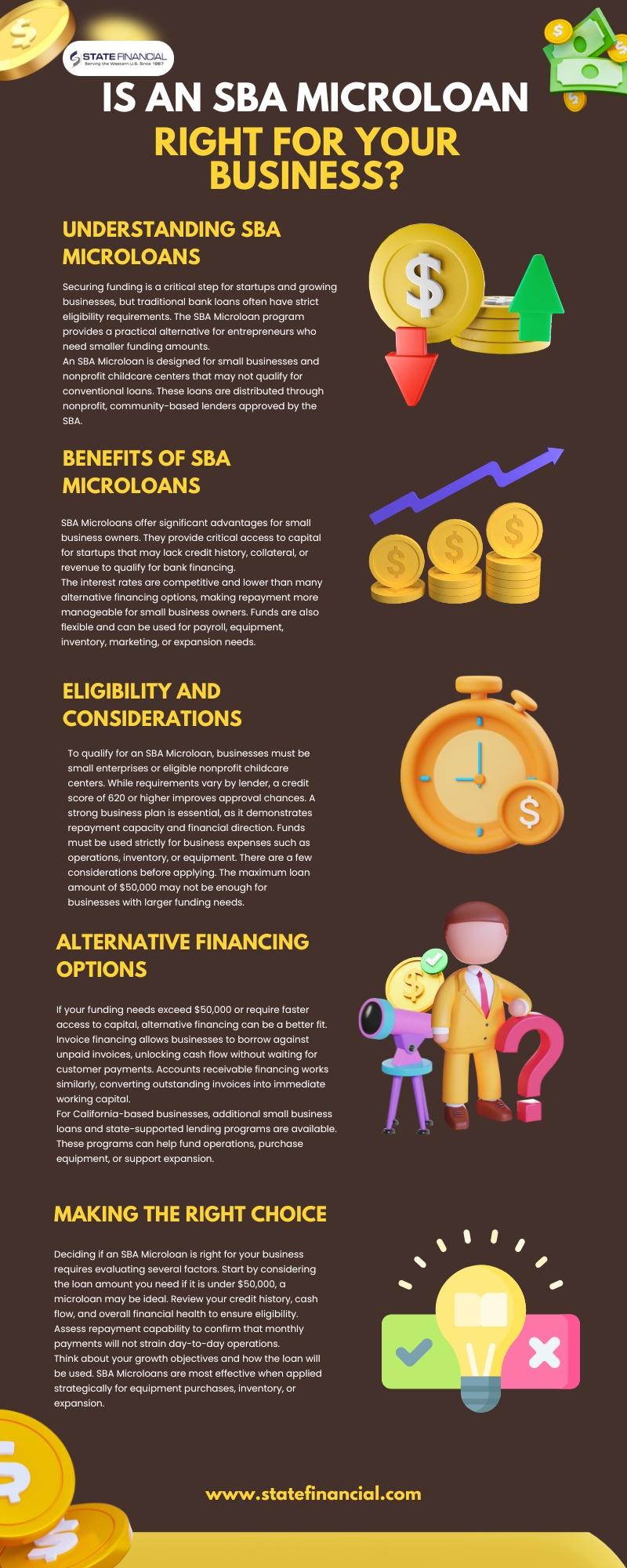
How to Determine if an SBA Microloan Is Right for Your Business
Deciding whether an SBA Microloan fits your business requires a careful evaluation of your financial and operational situation:
- Loan Amount Requirements
Assess how much funding is needed. Microloans are ideal for smaller amounts, but larger projects may require additional financing. - Financial Health
Evaluate cash flow, credit history, and existing debt. A strong financial profile improves the likelihood of loan approval and favorable terms. - Repayment Capability
Ensure that monthly repayments are manageable and will not strain daily operations. - Growth Objectives
Determine how the loan will be used, whether for purchasing equipment, funding operations, or expanding services. SBA Microloans are most effective when applied strategically. - Need for Guidance
Consider whether your business could benefit from mentorship or technical assistance. SBA Microloans provide access to lenders who offer guidance on planning and strategy.
Real-World Impact of SBA Microloans
SBA Microloans have helped thousands of small businesses nationwide launch, expand, and stabilize operations. Many borrowers use these loans to:
- Purchase essential equipment
- Fund inventory or materials
- Improve cash flow and operational efficiency
For startups and underserved businesses, microloans are more than just financial tools. They provide mentorship, support, and guidance, which can make a significant difference in long-term success. Businesses across industries, including retail, food services, and professional services, have leveraged SBA Microloans to achieve sustainable growth.
Tips for Applicants
- Prepare a detailed business plan: Lenders prioritize businesses with clear goals, financial projections, and repayment strategies.
- Check your credit score: Higher scores increase the chance of approval and better loan terms.
- Consider alternative financing options: Even if a microloan works, solutions like invoice or receivables-based financing can provide faster access to cash.
- Plan for repayment: Ensure your business can meet obligations without affecting operations.
- Take advantage of mentorship: SBA-approved lenders often provide business guidance and training to support growth.
Frequently Asked Questions (FAQ)
- What is the maximum loan amount for an SBA Microloan?
The maximum is $50,000, with an average loan size of approximately $13,000. - Who qualifies for an SBA Microloan?
Eligible recipients include small businesses and certain nonprofit childcare centers. Creditworthiness, business type, and a strong business plan are important factors. - How can SBA Microloans be used?
Funds can be used for payroll, inventory, equipment, working capital, or marketing, allowing flexible allocation according to business needs. - How long does it take to get approved for a Microloan?
Approval time varies depending on the lender and completeness of the application. Thorough preparation can help shorten the process. - Are there alternatives if a microloan is not sufficient?
Yes, options like invoice financing, accounts receivable financing, and local small business loans provide additional funding for various business needs.