



Running a business successfully requires more than just great products or services. Growth often depends on access to reliable funding that can support expansion, daily operations, equipment purchases, payroll, inventory management, and cash flow stability. For many small and mid-sized businesses, secured business loans have become one of the most practical and affordable financing solutions available.
Unlike unsecured financing, secured business loans are backed by collateral, giving lenders additional confidence when approving funding. Because the loan is supported by business assets, borrowers typically gain access to lower interest rates, larger loan amounts, and longer repayment terms. This makes secured lending especially valuable for businesses looking to scale operations without putting excessive pressure on cash flow.
In today’s competitive market, understanding how secured business loans work can help business owners make smarter financial decisions and choose financing options that align with long-term growth goals.
What Is a Secured Business Loan?
A secured business loan is a type of financing that requires the borrower to pledge collateral in exchange for funding. Collateral is an asset the lender can claim if the borrower fails to repay the loan according to the agreed terms.
Common forms of collateral include:
- Commercial property
- Equipment and machinery
- Inventory
- Business vehicles
- Accounts receivable
- Savings or cash reserves
- Other valuable business assets
Since lenders take on less risk with secured financing, they are often willing to provide better loan terms compared to unsecured loans.
Secured loans are widely used by growing companies that need capital for expansion, purchasing equipment, hiring staff, increasing inventory, or managing temporary cash flow gaps.
Why Secured Loans Are Important for SMBs
Small and medium-sized businesses frequently face financial challenges during periods of growth. Even profitable businesses can experience cash flow shortages due to delayed customer payments, seasonal demand changes, or rising operational expenses.
Secured financing helps businesses unlock the value of existing assets while maintaining operational stability.
Many business owners choose secured loans because they offer:
- Lower monthly payments
- Higher approval rates
- More borrowing flexibility
- Access to larger funding amounts
- Better interest rates
- Longer repayment schedules
For businesses that may not qualify for large unsecured loans, secured financing creates opportunities to obtain working capital while supporting long-term growth.
How Secured Business Loans Work
The process of obtaining a secured business loan usually involves several steps.
Asset Evaluation
The lender first reviews the value of the asset being used as collateral. The type and value of the collateral directly affect the amount the business can borrow.
For example:
- Equipment loans may cover a percentage of equipment value
- Real estate-backed loans can provide substantial financing amounts
- Receivables financing depends on the quality of outstanding invoices
The stronger the collateral, the more favorable the financing terms may become.
Financial Review
Lenders also examine the financial health of the business, including:
- Revenue history
- Profitability
- Cash flow consistency
- Existing debt obligations
- Business credit profile
- Time in business
Strong financial records improve approval chances and may help businesses secure better repayment terms.
Loan Approval and Funding
Once the lender completes underwriting and collateral verification, the loan terms are finalized. Approved businesses receive funding either as a lump sum or through a revolving credit structure depending on the financing type.
Some secured loans can fund quickly, while others may require additional documentation and review.
Common Types of Secured Business Loans
Different businesses require different financing structures. Understanding the major types of secured loans helps business owners select the right option for their needs.
SBA Loans
SBA-backed loans are among the most popular financing solutions for small businesses in the United States. These loans are partially guaranteed by the government, which reduces lender risk and improves access to funding for borrowers.
SBA loans are commonly used for:
- Business expansion
- Working capital
- Equipment purchases
- Commercial real estate
- Refinancing debt
They are known for competitive interest rates and long repayment terms, making them attractive for growing businesses.
Equipment Financing
Businesses that rely on machinery, technology, or vehicles often use Equipment Financing to preserve working capital while acquiring essential assets.
The equipment itself serves as collateral, making approval easier for many companies.
Industries that commonly use equipment financing include:
- Construction
- Manufacturing
- Transportation
- Agriculture
- Healthcare
This type of financing allows businesses to modernize operations without large upfront investments.
Commercial Real Estate Loans
Commercial real estate financing helps businesses purchase offices, warehouses, retail locations, or industrial facilities.
These loans typically offer:
- Long repayment terms
- Stable monthly payments
- Lower interest rates
- Larger financing amounts
Businesses investing in permanent locations often benefit from property-backed financing because it supports long-term operational growth.
Inventory Financing
Retailers and wholesalers frequently need capital to purchase inventory before busy sales periods.
Inventory financing allows businesses to secure funding using inventory as collateral. This helps companies prepare for seasonal demand while maintaining healthy cash flow.
Accounts Receivable Financing
Many businesses struggle with delayed customer payments despite having strong sales performance. Accounts receivable financing helps companies convert unpaid invoices into immediate working capital.
Businesses often partner with the Best Accounts Receivable Financing Companies to improve liquidity, maintain payroll, purchase inventory, and support ongoing operations without waiting weeks or months for invoice payments.
This financing solution is especially common in industries such as transportation, staffing, manufacturing, wholesale distribution, and logistics.
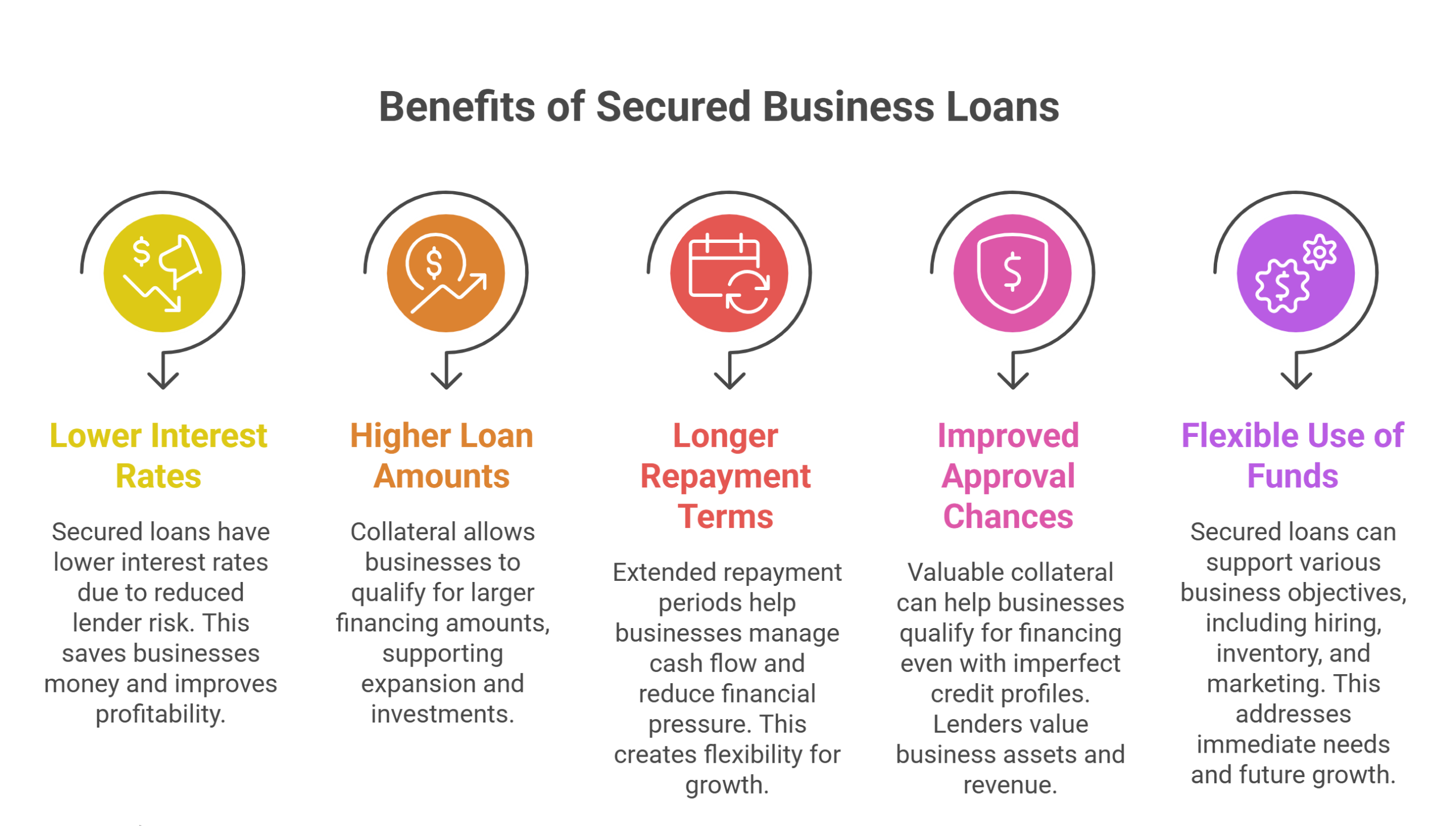
Benefits of Secured Business Loans
Secured financing provides several important advantages that make it attractive for small and mid-sized businesses.
Lower Interest Rates
Because lenders face reduced risk, secured loans usually come with lower interest rates than unsecured financing.
Lower borrowing costs help businesses save money over time and improve profitability.
Higher Loan Amounts
Businesses can often qualify for larger financing amounts when collateral is involved. This is especially important for expansion projects, equipment purchases, or large operational investments.
Longer Repayment Terms
Extended repayment periods help businesses manage monthly cash flow more effectively.
Longer loan terms reduce financial pressure and create more flexibility for operational growth.
Improved Approval Chances
Businesses with valuable collateral may still qualify for financing even if their credit profile is not perfect.
Lenders often place significant value on business assets and revenue performance when evaluating secured loan applications.
Flexible Use of Funds
Secured business loans can support a wide range of business objectives, including:
- Hiring employees
- Purchasing inventory
- Expanding facilities
- Marketing campaigns
- Equipment upgrades
- Payroll support
- Working capital management
This flexibility allows businesses to address immediate needs while planning for future growth.
Risks of Secured Business Loans
Although secured financing offers many advantages, businesses should also understand the potential risks involved.
Risk of Losing Collateral
If the borrower cannot meet repayment obligations, the lender may seize the pledged collateral.
Depending on the loan structure, this could include:
- Equipment repossession
- Property foreclosure
- Loss of business assets
- Collection rights on receivables
Business owners should carefully evaluate repayment ability before accepting financing.
Longer Approval Process
Secured loans often require additional documentation, asset appraisals, and underwriting reviews.
As a result, approval timelines may be longer compared to certain unsecured financing options.
Documentation Requirements
Businesses may need to provide:
- Tax returns
- Financial statements
- Bank records
- Asset documentation
- Accounts receivable reports
- Business licenses
Organized financial records can help speed up the approval process.
How Businesses Can Improve Loan Approval Chances
Businesses seeking secured financing can improve approval odds by strengthening their financial profile before applying.
Maintain Accurate Financial Records
Clean bookkeeping and updated financial statements demonstrate professionalism and improve lender confidence.
Improve Cash Flow Stability
Consistent revenue and healthy cash flow patterns help lenders evaluate repayment capacity more positively.
Reduce Existing Debt
Lower debt obligations improve financial ratios and increase borrowing eligibility.
Build Strong Business Credit
A positive business credit history can help businesses secure better financing terms and lower interest rates.
Create a Clear Growth Strategy
Lenders prefer borrowers who clearly explain how loan funds will support growth and generate revenue.
A detailed business plan can strengthen financing applications significantly.
Secured Loans vs Unsecured Loans
Understanding the differences between secured and unsecured financing helps businesses choose the most appropriate solution.
| Feature | Secured Loan | Unsecured Loan |
| Collateral Required | Yes | No |
| Interest Rates | Lower | Higher |
| Loan Amounts | Larger | Smaller |
| Repayment Terms | Longer | Shorter |
| Approval Difficulty | Easier with assets | More credit dependent |
| Risk to Borrower | Asset loss possible | No collateral risk |
Businesses focused on affordability and larger funding amounts often prefer secured financing options.
Financing Demand Continues to Grow
Small businesses across the country continue seeking flexible financing solutions to support expansion and operational stability. Rising operational costs, evolving market demands, and increased competition have made access to capital more important than ever.
Many entrepreneurs actively explore Small Business loans in USA to secure funding for modernization, staffing, equipment purchases, and working capital needs.
California remains one of the most active commercial financing markets due to its strong startup ecosystem and diverse industries. As a result, demand for Small Business loans in California continues growing among businesses seeking flexible funding options for expansion and long-term growth.
Final Thoughts
Secured business loans provide a reliable and cost-effective financing solution for small and mid-sized businesses looking to grow with confidence. By leveraging valuable business assets, companies can access larger funding amounts, lower interest rates, and repayment structures that support long-term stability.
Whether used for expansion, equipment purchases, inventory management, or working capital support, secured financing can help businesses improve operations and remain competitive in changing markets.
However, borrowers should carefully evaluate repayment obligations and collateral risks before choosing any financing solution. Businesses with strong financial management, organized records, and clear growth strategies are often best positioned to maximize the benefits of secured business lending.