




In today’s fast-moving and competitive business landscape, maintaining steady cash flow is one of the biggest challenges companies face. Even profitable businesses often struggle with liquidity due to delayed receivables, rising operational expenses, or uneven revenue cycles. This mismatch between incoming and outgoing cash is known as a working capital gap and if not addressed properly, it can limit growth and disrupt operations.
Fortunately, modern credit solutions provide businesses with powerful tools to overcome these challenges. From invoice-based financing to flexible lending structures, companies now have access to funding options that align with their cash flow needs rather than restrict them.
What Is a Working Capital Gap?
A working capital gap occurs when a business does not have enough short-term liquidity to meet its immediate financial obligations. While a company may show profits on paper, cash flow shortages can still create serious operational hurdles.
Common Causes of Working Capital Gaps
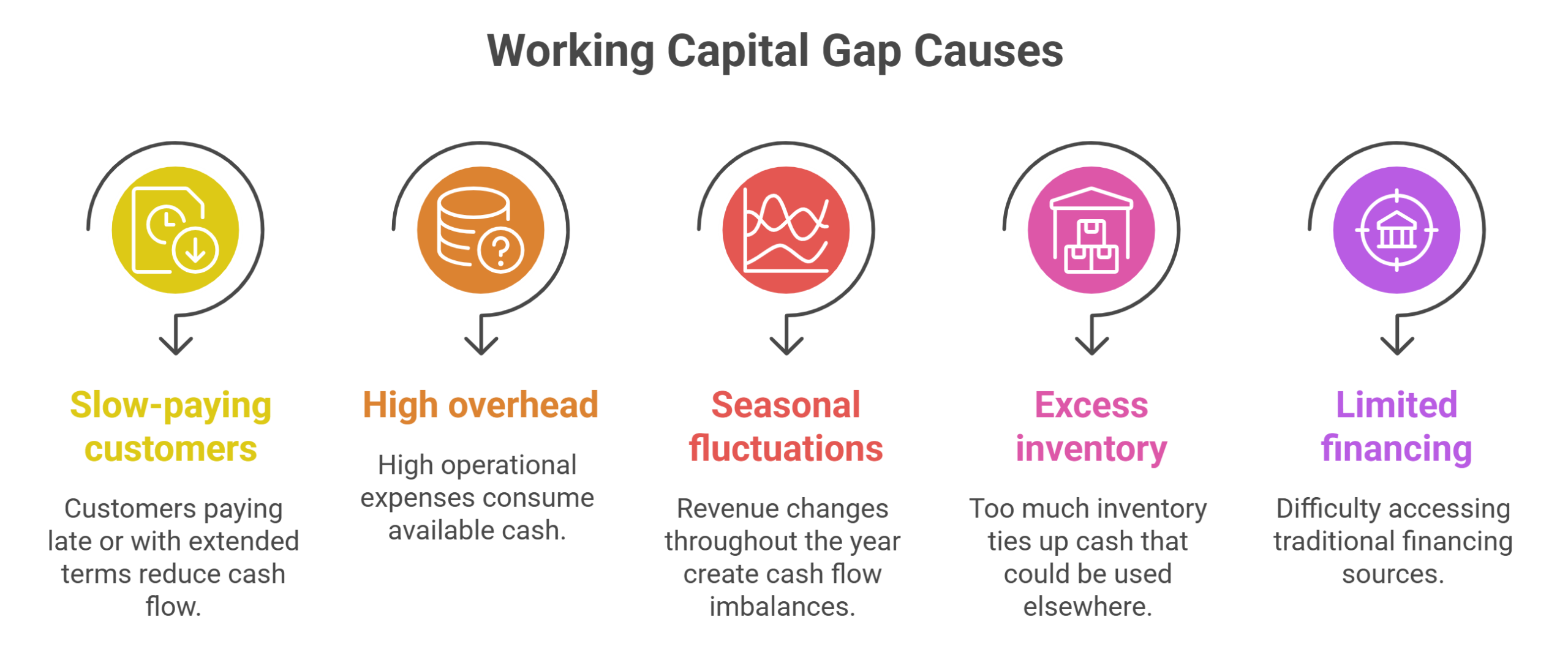
- Slow-paying customers or extended payment terms
- High overhead and operational expenses
- Seasonal fluctuations in revenue
- Excess inventory tying up cash
- Limited access to traditional financing
Many small and mid-sized businesses face recurring liquidity shortages, making external funding a necessary part of their financial strategy.
Why Addressing Cash Flow Gaps Is Critical
Ignoring working capital issues can lead to more than just temporary inconvenience. It can have long-term consequences for a business.
Key Impacts Include:
- Operational Disruptions: Difficulty in paying employees, suppliers, or rent
- Missed Growth Opportunities: Inability to invest in expansion or new projects
- Damaged Business Relationships: Late payments affecting vendor trust
- Higher Financing Costs: Emergency borrowing often comes with higher interest rates
Businesses that proactively manage cash flow are more resilient and better positioned for long-term success.
Smart Credit Solutions to Maintain Liquidity
Modern financing tools are designed to provide flexibility, speed, and accessibility. These solutions focus on real-time business performance rather than relying solely on traditional credit metrics.
Account Factoring Company
An Account Factoring Company helps businesses unlock cash tied up in unpaid invoices. This approach allows companies to convert pending receivables into usable funds much earlier in the payment cycle, improving liquidity without taking on additional debt.
Benefits:
- Faster access to working capital
- No loan repayment burden
- Scales alongside business growth
This solution is widely used in industries where billing cycles are extended and cash flow timing is critical.
Improving Cash Flow with Structured Financing
Maintaining consistent liquidity often requires a mix of financial tools and operational discipline. Businesses should evaluate both internal processes and external funding options to stay financially stable.
ABL Loan for Business
An ABL Loan for Business provides funding based on the value of a company’s assets, such as inventory, receivables, or equipment. This makes it an excellent choice for businesses that have strong asset bases but fluctuating cash flow.
Key Advantages:
- Flexible borrowing limits
- Access to higher capital amounts
- Funding aligned with asset value
Asset-based lending is particularly useful during periods of expansion or when businesses need to support large operational cycles.
Comparison of Popular Credit Solutions
| Credit Solution | Best For | Funding Speed | Collateral Required | Key Benefit |
| Invoice Factoring | Businesses with unpaid invoices | Very Fast (24–48 hrs) | Invoices | Immediate cash flow |
| Asset-Based Lending | Asset-rich businesses | Moderate | Inventory, assets | High borrowing capacity |
| Traditional Business Loans | Established businesses | Slow | Varies | Lower interest rates |
| Receivables Financing | Businesses with steady receivables | Fast | Accounts receivable | Flexible funding |
Long-Term Financing Options for Stability
Beyond short-term solutions, businesses often need structured financing to support ongoing operations and growth.
Small Business Loans in USA
For companies seeking predictable funding, Small Business Loans in USA offer a structured approach to managing financial needs.
Features:
- Fixed repayment schedules
- Competitive rates for qualified borrowers
- Suitable for expansion and operational expenses
While these loans can be cost-effective, they may require detailed documentation and longer approval timelines.
Enhancing Cash Flow with Specialized Lenders
Access to the right financing partner can significantly improve how businesses handle working capital challenges.
Best Accounts Receivable Financing Companies
Partnering with the Best Accounts Receivable Financing Companies allows businesses to secure funding based on outstanding invoices while maintaining operational continuity.
Key Benefits:
- Quick access to funds
- Flexible approval criteria
- Reduced dependency on traditional credit
This approach ensures businesses can continue operating smoothly even when customer payments are delayed.
Choosing the Right Credit Solution
Selecting the right financing option requires careful evaluation of your business needs.
Consider the Following:
- Cash Flow Pattern: Identify where funds are tied up
- Urgency: Determine how quickly you need capital
- Cost vs Flexibility: Balance affordability with accessibility
- Growth Goals: Choose solutions that scale with your business
A well-informed decision can significantly improve financial stability and operational efficiency.
Practical Strategies to Reduce Working Capital Gaps
While financing plays a crucial role, internal financial management is equally important.
Improve Receivables Management
- Automate invoicing
- Follow up on overdue payments
- Offer early payment incentives
Optimize Inventory
- Reduce excess stock
- Align inventory with demand
Strengthen Supplier Relationships
- Negotiate better payment terms
- Build long-term partnerships
Monitor Financial Metrics
- Track cash flow regularly
- Analyze liquidity ratios
The Future of Credit Solutions
Technology continues to reshape how businesses access and manage financing.
Key Trends:
- AI-driven lending decisions
- Faster approval processes
- Growth of fintech platforms
- Real-time financial insights
These advancements are making credit solutions more accessible and efficient for businesses of all sizes.
Final Thoughts
Working capital gaps are a reality for many businesses, but they don’t have to limit growth or create long-term setbacks. With the right combination of financial strategy and well-timed funding, companies can maintain stability while continuing to move forward with confidence.
By leveraging flexible financing options and building relationships with reliable financial partners, businesses can unlock liquidity when it’s needed most. This not only helps in managing day-to-day operations smoothly but also creates room to invest in growth opportunities, manage unexpected expenses, and stay competitive in changing market conditions.
It is equally important to strengthen internal financial practices. Regularly monitoring cash flow, improving receivables management, and planning ahead for seasonal fluctuations can significantly reduce the risk of future gaps. Businesses that take a proactive approach are better equipped to handle uncertainty and make informed decisions.
Frequently Asked Questions (FAQs)
1. What is the quickest way to improve cash flow?
Invoice-based financing solutions typically provide the fastest access to funds.
2. Is factoring better than a loan?
It depends on your needs. Factoring offers speed and flexibility, while loans provide structured repayment.
3. Can new businesses access these credit solutions?
Yes, many alternative financing options are available even for businesses with limited credit history.
4. What is the biggest advantage of asset-based lending?
It allows businesses to unlock value from existing assets without selling them.
5. How do I choose the right financing partner?
Look for transparency, flexibility, and industry experience when selecting a lender.