




When a business or individual needs fast access to funds, the choice of lender plays a critical role. Many borrowers are presented with two broad categories: unregulated lenders and licensed lenders. While both can provide financing, the differences between them can determine whether a borrower experiences transparency and protection or hidden costs and risk.
This article explores the distinctions between unregulated and licensed lenders, outlines the dangers and opportunities each presents, and provides insights for businesses seeking safe and effective financing solutions.
What Do These Terms Really Mean?
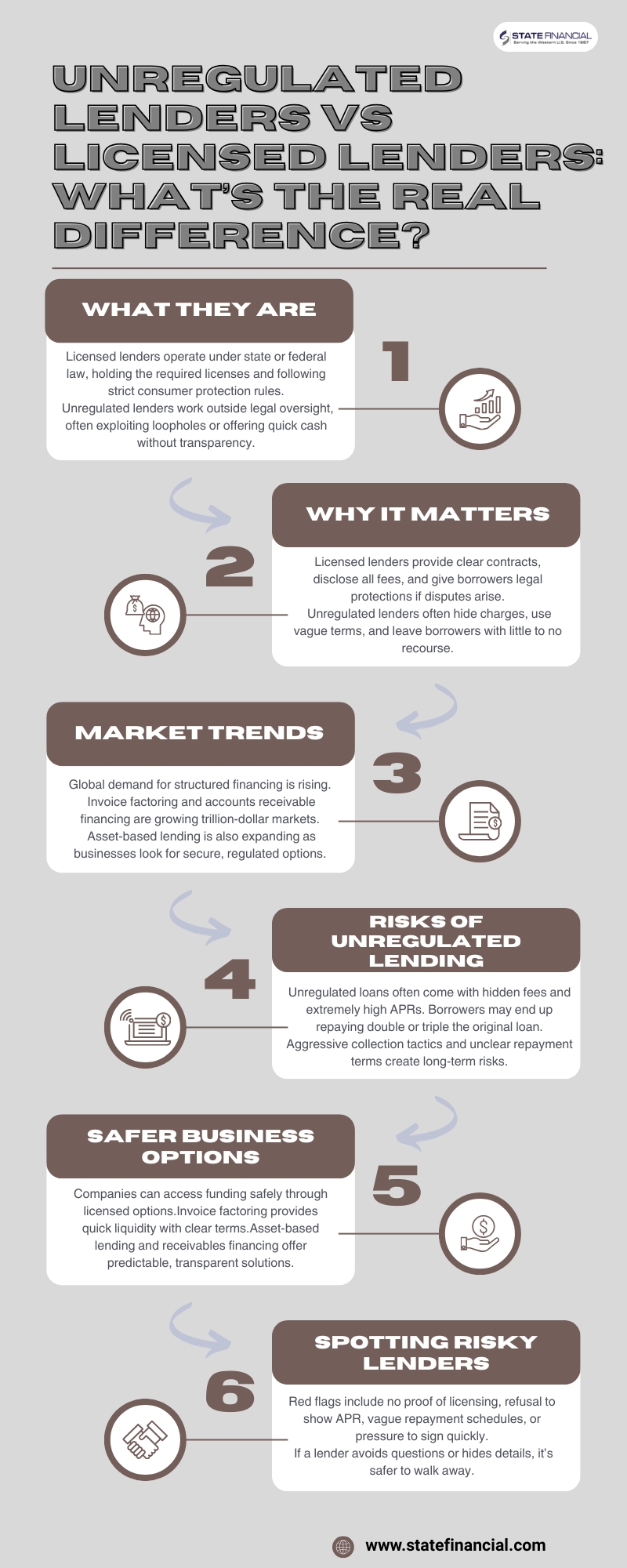
Licensed lenders are financial institutions or companies that operate under state or federal laws. They hold the required licenses or registrations to provide credit and are subject to ongoing regulatory oversight. These lenders must adhere to strict consumer protection laws, disclosure requirements, and fair lending standards.
Unregulated lenders operate outside the legal and regulatory framework. They are not required to follow the same compliance rules and often avoid scrutiny by exploiting loopholes or working without authorization. This group includes informal moneylenders, certain online loan providers, and operators that prioritize speed over transparency. While not all unregulated lending is illegal, it exposes borrowers to greater risk.
Why the Difference Matters
Transparency and Disclosure
Licensed lenders are legally obligated to provide clear, written details about interest rates, fees, repayment schedules, and penalties. Borrowers know what they are committing to before signing. Unregulated lenders often present vague terms, conceal charges, or structure repayment schedules that mask the true cost of borrowing.
Legal Protections and Recourse
When borrowers deal with a licensed lender, they have avenues for complaints and legal remedies if issues arise. Regulatory bodies oversee these lenders, ensuring accountability. In contrast, if a borrower faces unfair practices with an unregulated lender, recovery options are limited and often costly.
Product Alignment
Licensed lenders typically provide products suited for long-term financial health, such as installment loans, lines of credit, and structured facilities. Unregulated lenders frequently push high-cost, short-term loans that may worsen financial challenges instead of solving them.
Market Trends and Statistics
The rise of alternative lending has reshaped the global financial landscape. The invoice factoring market alone is projected to grow steadily, with businesses increasingly turning to this form of financing to improve liquidity. Many small and medium enterprises use factoring services to unlock cash from unpaid invoices rather than relying on unregulated credit sources.
Meanwhile, accounts receivable financing has become a trillion-dollar market worldwide, offering structured, transparent access to working capital. Companies now prefer reliable options, such as partnering with an accounts receivable financing company, to ensure fair contracts and professional support.
Asset-based finance has also gained traction, especially as banks have tightened their traditional lending standards. With businesses needing to leverage inventory, equipment, or receivables as collateral, the demand for structured facilities has surged, creating more sustainable alternatives to risky lending sources.
Types of Unregulated Lending You May Encounter
- App-based payday loans that disguise high interest rates with small flat fees.
- Peer-to-peer offers where the origin of funds and risk management are unclear.
- Local informal loans from individuals or businesses without financial licenses.
- Hybrid merchant advances that combine loan features with aggressive repayment structures.
Not every fintech or digital lender is unregulated. Many comply with licensing laws and consumer protection standards. The red flags to watch for are unclear contracts, lack of regulator information, and overly aggressive collection methods.
The Hidden Costs of Unregulated Lending
Unregulated lenders often impose fees that translate into annual percentage rates far higher than those of regulated products. Borrowers may find themselves repaying double or triple the amount originally borrowed. High costs are compounded when loans are rolled over or refinanced under unclear terms.
Licensed lenders may still charge fees, but these must be disclosed clearly. Many regions enforce caps on interest rates and prohibit abusive practices. The key takeaway is simple: when a lender avoids disclosing the true cost of borrowing, the risk of exploitation increases.
Safer Options for Businesses
Businesses seeking working capital have alternatives that reduce reliance on risky credit. Transparent lending solutions allow companies to protect relationships with clients while ensuring liquidity.
Another option is partnering with the Best invoice factoring companies. These providers offer clear contracts, straightforward advance rates, and long-standing reputations that unregulated lenders cannot match.
For companies with significant tangible assets, Asset based Lending facilities can provide secured borrowing with predictable terms. By leveraging equipment, receivables, or property, businesses can access funding while maintaining long-term financial health.
Key Questions to Ask Before Borrowing
- What is the annual percentage rate (APR)?
- Are all fees, both up-front and ongoing, disclosed clearly?
- Who regulates the lender, and can their license be verified?
- What rights does the borrower have if disputes occur?
- How does the lender handle late payments or restructuring?
Borrowers should treat hesitation or vague answers as a sign to walk away. Reliable lenders welcome questions and provide clear documentation.
Regulatory Developments
Governments worldwide are strengthening oversight of consumer and business lending. New rules in major markets have targeted hidden fees, excessive account withdrawals, and aggressive collection tactics. Some regions have introduced severe penalties for illegal lending, including fines and criminal charges.
For borrowers, this means more protection when dealing with licensed lenders and greater risks when turning to unregulated sources. Businesses in particular should expect regulators to continue tightening standards in both consumer and commercial finance.
How to Spot a Risky Lender
- No proof of licensing or registration.
- Refusal to provide an APR.
- Unclear or overly complex repayment structures.
- Pressure to sign quickly without review.
- Reports of aggressive or abusive collection practices.
If a lender shows several of these traits, it is best to seek financing elsewhere.
Conclusion: Stability Over Shortcuts
Unregulated lenders can seem appealing because they promise fast money with minimal paperwork. However, the lack of oversight often results in hidden costs, financial strain, and legal risks. Licensed lenders, while more structured, provide transparency, accountability, and long-term sustainability.
For businesses, the smarter path is to work with financing partners that are licensed, experienced, and committed to transparency. Whether that means engaging a trusted receivables finance provider, exploring factoring solutions, or structuring an asset-based facility, the goal is the same: protect financial health while accessing the capital needed for growth.