




Starting or growing a small business is an exciting journey, but it often comes with a critical challenge: securing the right financing. Entrepreneurs have multiple options, but two of the most common are a new small business loan from a commercial lender and an SBA-backed loan. Each option has advantages, drawbacks, and unique considerations. Understanding the differences can help you make a strategic decision that supports growth while protecting cash flow.
This article provides a detailed comparison, highlights key factors such as interest rates, eligibility, speed, and flexibility, and explains which type of loan might be the best fit for your business.
Understanding the Basics
Before diving into comparisons, it is important to define the two types of loans.
New Small Business Loan: These loans come from banks, credit unions, or online lenders. They can be short-term or long-term and may focus on working capital, inventory purchases, or equipment financing. The approval process is usually faster than SBA loans, although interest rates may be slightly higher.
SBA Loan: These loans are partially guaranteed by the U.S. Small Business Administration. SBA loans, including the 7(a), 504, and microloan programs, are designed to help small businesses access affordable financing. They often have lower interest rates, longer repayment terms, and higher loan amounts, but the application process is more detailed and takes longer.
Both loan types provide funds needed to grow a business, but the right choice depends on your financial needs, business history, and how quickly you require the capital.
Loan Amounts and Uses
SBA loans typically allow for larger loan amounts compared to standard small business loans.
SBA 7(a) Loans: These can range from $5,000 to $5 million and are versatile, allowing for working capital, equipment purchase, debt refinancing, and more.
SBA 504 Loans: These are primarily for purchasing real estate or major fixed assets, with repayment terms ranging from 10 to 25 years.
Commercial small business loans generally cater to smaller amounts. Many banks and online lenders offer loans ranging from $10,000 to $500,000. These loans are ideal for short-term working capital, inventory purchases, or seasonal spikes in demand.
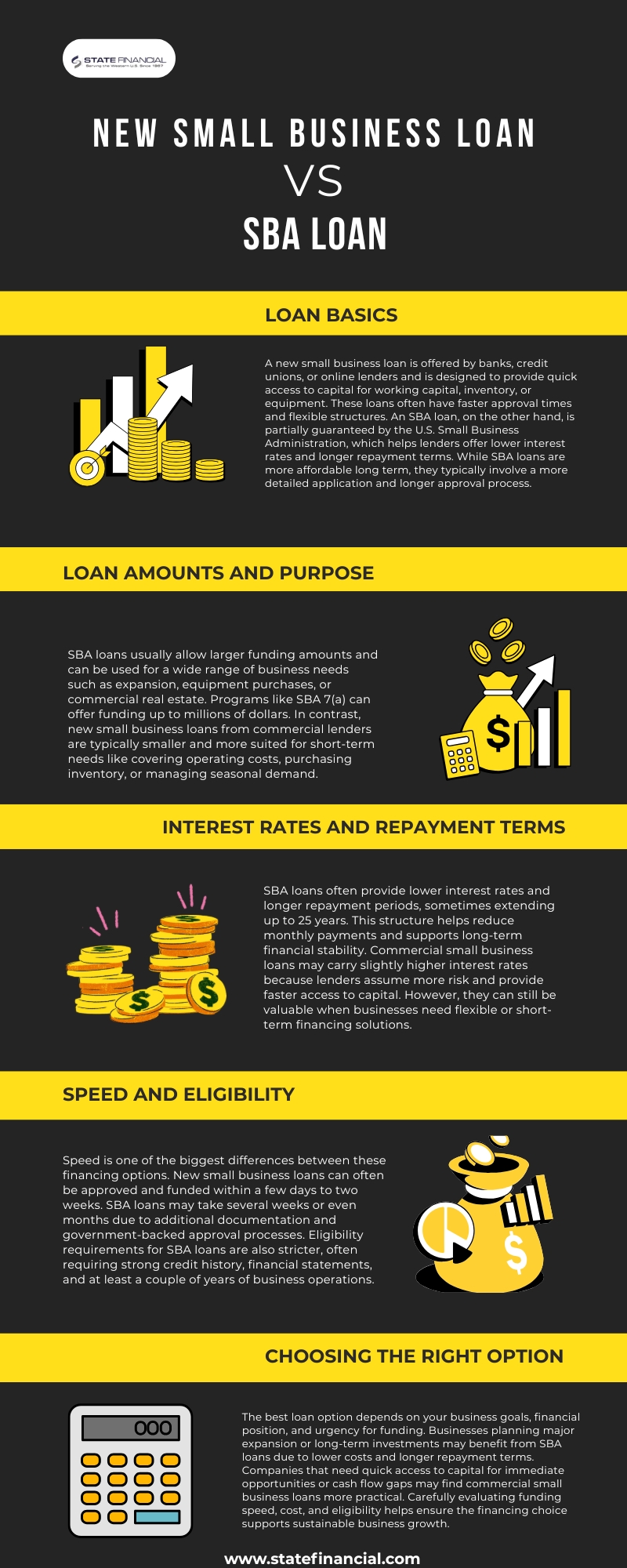
Interest Rates and Cost Considerations
Cost is a critical factor when comparing loan options.
SBA Loans: Typically have lower interest rates than conventional small business loans. Rates are set by the lender and capped by the SBA. Longer repayment periods help reduce monthly payments.
Commercial Loans: Rates can vary widely depending on your credit profile, loan size, and lender. Online lenders often offer faster funding but charge higher rates to offset risk.
Minimizing the cost of borrowing is important. If your business qualifies, an SBA loan usually provides the best financial advantage over time.
Speed of Funding
How quickly you can access funds can determine which loan type is most suitable.
Commercial Small Business Loans: Funding can occur within a few days to two weeks, depending on the lender and required documentation. This speed is ideal for immediate cash flow needs or unexpected business opportunities.
SBA Loans: Funding usually takes several weeks or even a couple of months due to the additional paperwork and approval process.
For businesses that need immediate liquidity, a commercial small business loan may be the better choice. If you can plan ahead, SBA loans provide favorable long-term terms.
Qualification Requirements
Eligibility criteria differ between these loan types.
SBA Loans: Generally require at least two years of operating history, strong personal and business credit, and financial statements demonstrating repayment ability. Collateral may also be required, including business assets or personal guarantees.
Commercial Small Business Loans: Qualification requirements are often more flexible. Online lenders may accept businesses with shorter operating history, lower credit scores, or limited collateral.
SBA loans are selective but offer better long-term terms for businesses with strong financial histories.
Collateral and Risk
Understanding the risks and security requirements associated with each loan type is important.
SBA Loans: Many SBA loans require collateral or personal guarantees. While this may feel restrictive, it allows lenders to offer lower rates and longer repayment periods.
Commercial Small Business Loans: Collateral requirements vary. Some loans, such as merchant cash advances or invoice financing, may be secured by receivables or future sales. Businesses with slow-paying clients may benefit from working with an accounts receivable financing company, which allows them to convert unpaid invoices into immediate cash without taking on long-term debt.
Cash Flow and Loan Structure
Cash flow plays a critical role in determining the best financing option.
SBA Loans: Longer repayment periods reduce monthly obligations, making them suitable for businesses that want predictable payments.
Commercial Loans: Shorter terms or higher interest rates can increase monthly payments but may be acceptable if the business needs rapid access to capital.
Analyzing cash flow ensures that financing supports growth rather than creating additional stress.
Geographic Considerations
Small businesses in different regions may have access to unique programs. For example, those seeking small business loans California may find state and local programs that complement federal loans. California offers financial incentives, community development programs, and lender networks that support both SBA and commercial loans. Exploring local options can help reduce borrowing costs.
Pros and Cons Comparison
| Feature | SBA Loan | New Small Business Loan |
| Loan Amount | $5,000–$5 million | $10,000–$500,000 |
| Interest Rate | Lower, SBA-regulated | Varies, often higher |
| Term Length | 10–25 years | Shorter, varies by lender |
| Speed | Several weeks to months | Days to two weeks |
| Collateral | Often required | Varies; some unsecured options |
| Eligibility | 2+ years business history, strong credit | Flexible; online lenders accept younger businesses |
| Best For | Long-term growth, major assets | Immediate working capital, small expansions |
Real-World Scenarios
- Growing Restaurant: Needs a new location, kitchen equipment, and low monthly payments. SBA 7(a) or 504 loans are best.
- E-commerce Retailer: Requires seasonal inventory quickly. Commercial loans or lines of credit provide faster funding.
- Professional Services Firm: Clients often pay invoices late. Working with an accounts receivable financing company can unlock cash tied up in unpaid invoices.
Tips for Choosing the Right Loan
- Evaluate cash flow to ensure monthly payments are sustainable.
- Determine whether the loan is for short-term working capital or long-term growth.
- Assess eligibility based on credit history, business age, and available collateral.
- Compare costs including interest rates, fees, and total repayment amounts.
- Consider speed and urgency of funding.
- Explore local or state-specific programs that may complement national loans.
Final Thoughts
Choosing between a new small business loan and an SBA loan depends on timing, purpose, eligibility, and risk. Commercial loans provide rapid access to capital, flexibility, and fewer qualification hurdles. SBA loans offer lower long-term costs, predictable payments, and larger loan amounts, ideal for established businesses planning long-term growth.
Carefully analyzing business needs, financial position, and growth plans ensures a strategic choice. Financing is not one-size-fits-all. The right loan can help expand operations, improve cash flow, and secure the future of your business. Whether you are a startup looking for immediate working capital or a growing company planning a major expansion, understanding your options ensures that your financing strategy aligns with your goals.
For businesses in the United States, it is also wise to explore small business loans USA options available through national lenders or local banks to ensure all opportunities are considered.