




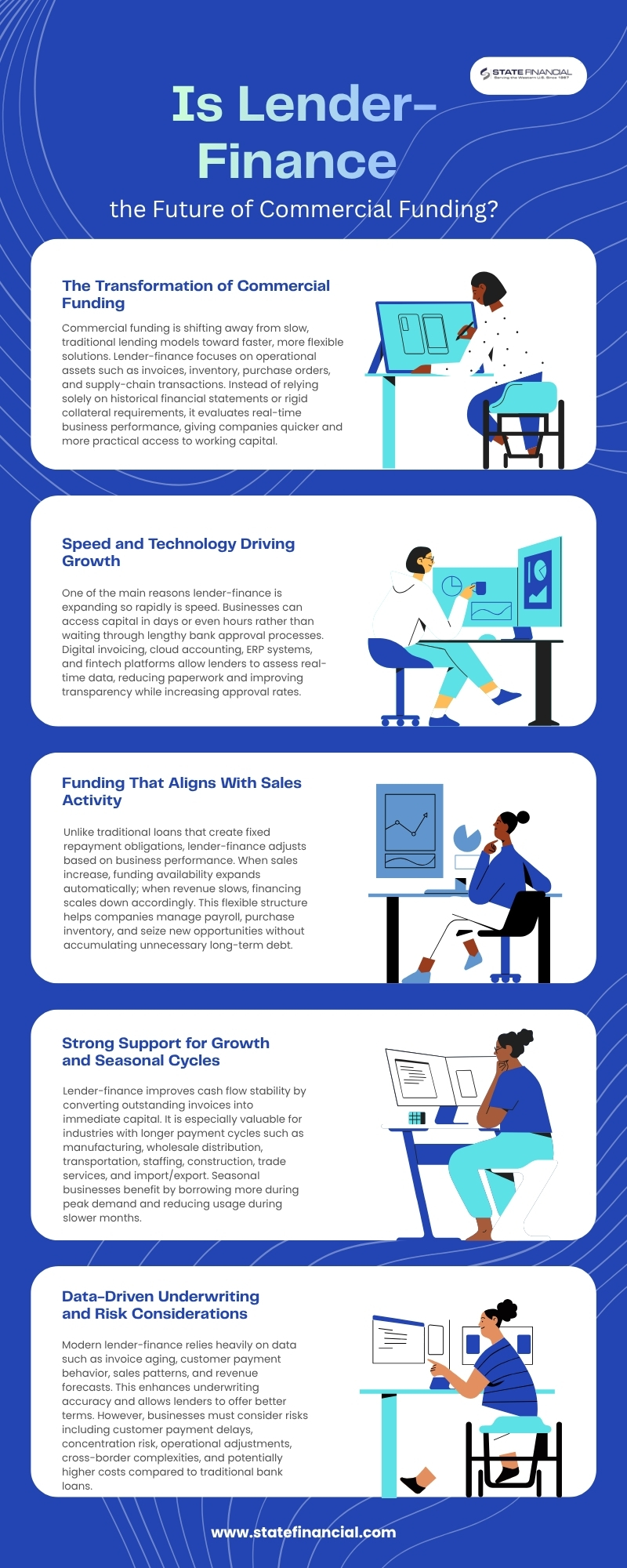
Commercial funding is undergoing a significant transformation as businesses shift away from slow, traditional lending models and toward faster and more flexible financing solutions. Among these changes, lender-finance is rapidly emerging as one of the most influential forces in modern business funding. It is becoming especially important for companies that need quick access to working capital without going through lengthy approval processes.
Lender-finance refers to funding structures that are tied to the operational assets of a business, such as invoices, inventory, purchase orders, or supply-chain transactions. These solutions rely on the real-time performance of the business rather than outdated financial statements or rigid collateral requirements. As a result, they offer a more practical and responsive approach to cash flow management.
Today, many growing businesses turn to an accounts receivable financing company when they need a reliable way to unlock immediate capital from outstanding invoices. This shift reflects a broader global trend toward financing solutions that are flexible, technology-driven, and aligned with day-to-day business activity.
Why Lender-Finance Is Growing So Rapidly
Several major factors are contributing to the accelerating popularity of lender-finance across industries and regions.
1. Faster Access to Capital
One of the strongest reasons for its rise is the speed at which businesses can access funds. Traditional banks often require extensive paperwork, long review periods, and strict qualification criteria. For many companies, especially those facing tight cash flow cycles, these delays can create serious operational challenges.
Lender-finance platforms, fintech solutions, and modern underwriting systems allow businesses to secure funding in days or even hours. This speed gives them the ability to meet urgent expenses such as purchasing inventory, handling payroll, or taking advantage of new opportunities.
2. Alignment With Real Business Activity
Unlike loans that are based solely on credit scores or collateral, lender-finance evaluates the strength of a company’s customers, revenue streams, and ongoing transactions. This creates a funding model that adjusts as the business grows. When sales increase, funding availability expands automatically. When sales slow, the financing naturally scales down without creating unnecessary debt.
3. Technology and Data Integration
Digital invoicing, cloud accounting systems, and ERP integrations have made it easier than ever for lenders to assess the financial health of a business. This real-time data reduces risk for lenders while increasing approval rates for businesses. It also minimizes paperwork and improves transparency.
4. Global Market Momentum
Worldwide, receivables financing and supply-chain finance markets continue to grow. Factoring and invoice-finance volumes have increased significantly as more companies adopt digital tools to manage payments, collections, and working capital. Today’s economic environment rewards businesses that can stay financially agile, and lender-finance provides the tools they need to do so.
How Lender-Finance Supports Business Growth
Lender-finance offers a number of operational advantages that make it a preferred funding model for businesses of all sizes.
1. Improved Cash Flow Stability
Companies that rely on large clients often struggle with delayed payments. When customers take 30, 60, or even 90 days to pay, operations slow down. Lender-finance solves this problem by converting outstanding invoices into cash quickly, allowing companies to operate without interruption.
2. Ability to Handle Seasonal Revenue Cycles
Seasonal businesses, such as those in retail, manufacturing, and distribution, often face unpredictable revenue swings. Lender-finance gives them the ability to borrow only what they need during busy periods and scale back during slower months.
3. Better Support for Rapid Expansion
Growing companies frequently invest heavily in new staff, inventory, and production. Access to fast and flexible funding ensures that growth is not hindered by cash flow constraints.
4. More Accessible Than Traditional Credit
Many small and mid-sized businesses do not qualify for bank loans due to insufficient collateral, lack of long credit history, or inconsistent revenue patterns. Lender-finance evaluates operational performance instead, making it more inclusive.
Some businesses in this situation choose to work with an account factoring company to help them manage customer payments while securing upfront capital against their receivables.
Industries That Benefit Most From Lender-Finance
Although any business with consistent invoicing can benefit from lender-finance, industries with longer payment cycles rely on these solutions the most. These include:
- Manufacturing
- Wholesale distribution
- Transportation and logistics
- Staffing and workforce agencies
- Construction
- Trade services
- Import and export companies
These industries often extend credit terms to their customers, which increases the time it takes to convert sales into cash. Lender-finance bridges this cash flow gap and strengthens operational stability.
The Growing Role of Data in Funding Decisions
Data has become central to modern commercial lending. With advanced technology, lenders can analyze real-time information such as:
- Outstanding invoice amounts
- Customer payment behavior
- Sales patterns
- Cash flow cycles
- Buyer credit history
- Revenue forecasts
This direct visibility reduces guesswork and improves underwriting accuracy. Businesses benefit because lenders can offer higher credit limits, better terms, and faster decisions based on reliable data instead of outdated financial statements.
Key Risks and Considerations
While lender-finance is highly beneficial, businesses should be aware of potential risks before choosing this option.
1. Customer Payment Delays
If customers delay or default on payments, the lender may reduce funding availability or hold reserves to manage risk. Strong customer relationships are essential.
2. Operational Adjustments
Businesses may need to improve recordkeeping, invoicing accuracy, or documentation to meet lender requirements. These changes typically benefit the company long-term but may require initial adjustments.
3. Cost Differences
While lender-finance is fast and flexible, it may cost more than traditional bank loans if a business has excellent credit or strong collateral. However, the added speed and convenience often justify the cost.
4. Concentration Risk
Companies that rely heavily on one or two customers may face funding restrictions. Diversifying the customer base can increase financing stability.
5. Cross-Border Complexities
Businesses that sell internationally must navigate differing regulations, currency challenges, and documentation rules. Many growing companies choose a factoring accounts receivable company when they need help managing international invoices and handling cross-border compliance issues.
Will Lender-Finance Replace Traditional Commercial Lending?
It is unlikely that lender-finance will eliminate traditional commercial loans altogether. Banks still excel in long-term financing such as real estate, large equipment purchases, and multi-year expansion plans. However, lender-finance is becoming a dominant force in short-term working capital funding.
The future will likely include a mix of:
- Term loans
- Lines of credit
- Invoice financing
- Receivables-backed lending
- Supply chain finance
- Purchase order financing
- Asset-based lending
- Embedded finance platforms
Businesses will choose based on what aligns best with their goals and operational needs.
Conclusion
Lender-finance is becoming one of the most important innovations in commercial funding. Its flexibility, speed, and reliance on real-time data make it ideal for businesses operating in fast-paced environments. As technology continues to improve and more companies adopt digital financial systems, lender-finance will keep expanding and playing a central role in business funding strategies worldwide.
It may not fully replace traditional lending, but it is undoubtedly shaping the future of working capital, supporting stronger cash flow, and giving companies of all sizes the financial agility they need to compete and grow.