




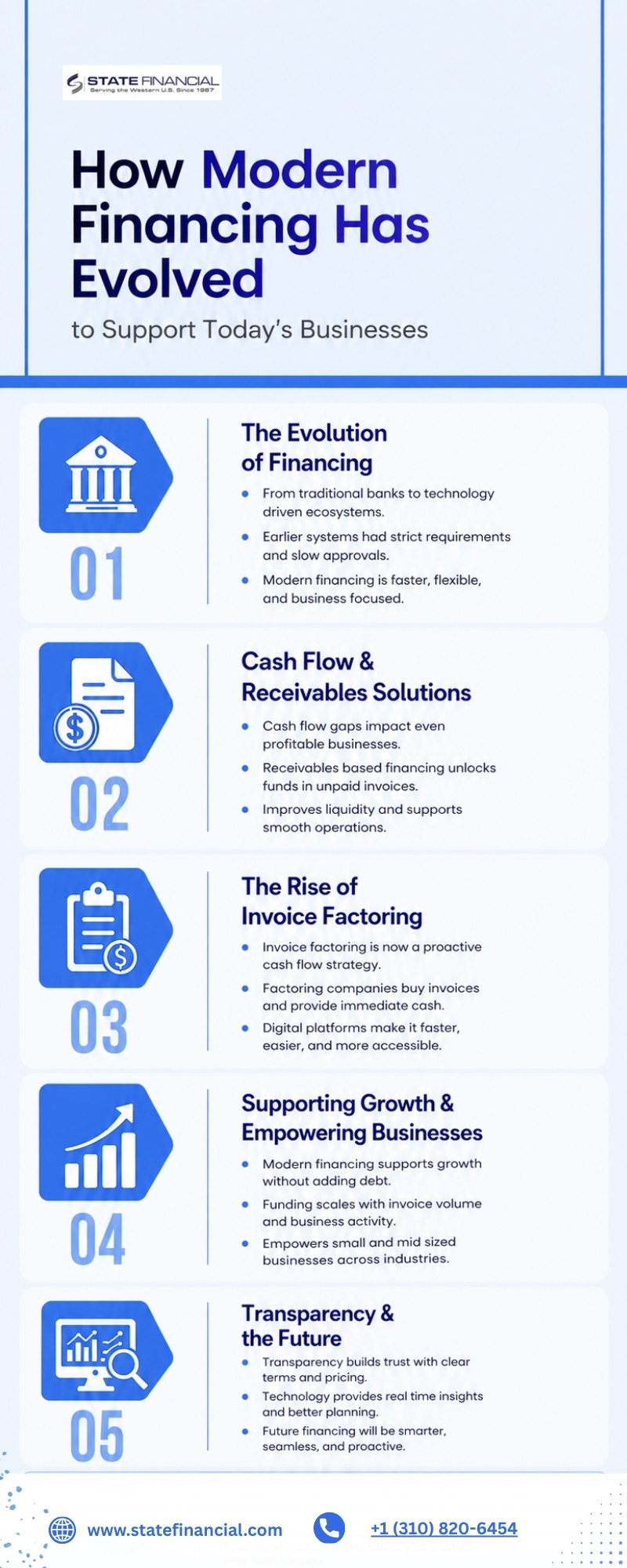
The way businesses access funding has changed significantly over time. What once relied heavily on traditional banking institutions has evolved into a flexible and technology driven financing ecosystem designed to meet the demands of modern enterprises. Today’s businesses operate in fast paced environments where cash flow timing, scalability, and adaptability are essential. As a result, financing solutions have evolved to support these realities rather than restrict them.
Modern financing is no longer just about borrowing money. It is about aligning capital access with operational needs, revenue cycles, and growth strategies. This evolution has allowed businesses of all sizes to compete, expand, and remain resilient in a constantly shifting economic landscape.
Traditional Financing and Its Limitations
For decades, banks were the primary source of business funding. Loans, lines of credit, and overdraft facilities were structured around strict qualification criteria. Businesses were required to demonstrate strong credit scores, lengthy operating histories, and valuable collateral.
While this approach worked for large and established companies, it often excluded small and growing businesses. Lengthy approval timelines, rigid repayment structures, and limited flexibility made traditional financing difficult to rely on during periods of rapid growth or unexpected disruption.
As business models diversified and competition increased, the need for more responsive and adaptable financing became clear.

The Emergence of Modern Financing Solutions
Modern financing began to take shape as alternative lenders identified gaps left by traditional institutions. These lenders focused on speed, accessibility, and real world business performance rather than static financial metrics alone.
Digital applications replaced paper based processes, reducing approval times from weeks to days or even hours. Instead of relying solely on credit scores, lenders began analyzing cash flow trends, transaction data, and customer payment behavior.
This shift marked a major turning point. Financing became a strategic resource rather than a bureaucratic obstacle, enabling businesses to act quickly when opportunities arose.
Technology as a Catalyst for Change
Technology has played a central role in the evolution of business financing. Advanced analytics, automation, and artificial intelligence have transformed how lenders evaluate risk and structure funding.
Businesses now benefit from transparent digital platforms that provide real time insights into funding status, repayment terms, and cash flow impact. This level of visibility supports better financial planning and smarter decision making.
As technology continues to advance, financing becomes more precise, personalized, and aligned with actual business performance.
Cash Flow Challenges in Modern Business
Even profitable businesses can face cash flow challenges. Delayed customer payments, seasonal revenue cycles, and rapid growth can all create short term funding gaps.
This reality has driven demand for solutions that convert earned revenue into usable capital without increasing long term liabilities. Businesses increasingly seek financing that supports daily operations while maintaining financial flexibility.
One of the most effective responses to this challenge involves funding solutions tied directly to receivables.
The Role of Receivables Based Financing
Receivables based financing allows businesses to access funds tied up in unpaid invoices. Instead of waiting weeks or months for customers to pay, companies can unlock working capital to cover payroll, inventory, and operating expenses.
An accounts receivable financing company supports this process by advancing funds based on the value of outstanding invoices. This approach helps businesses maintain liquidity, stabilize cash flow, and support growth initiatives.
Global market trends indicate steady growth in receivables based financing, highlighting its importance in modern cash flow management.
The Evolution of Invoice Factoring
Invoice factoring has undergone a significant transformation over the years. What was once viewed as a last resort is now widely accepted as a proactive cash flow management strategy.
An account factoring company purchases unpaid invoices and provides immediate capital. Modern factoring solutions rely on digital platforms, automated processes, and faster funding cycles, making them more accessible than ever.
As a result, factoring is now commonly used by healthy, growth focused businesses across a wide range of industries.
Supporting Growth Without Traditional Debt
One of the most valuable benefits of modern financing is its ability to support growth without increasing traditional debt burdens. Many solutions scale with business activity rather than requiring fixed repayment schedules.
A factoring accounts receivable company enables this flexibility by tying available funding directly to invoice volume. As sales grow and invoices increase, access to capital grows alongside the business.
This structure allows companies to pursue new opportunities with confidence while maintaining financial balance.
Empowering Small and Mid Sized Businesses
Small and mid sized businesses are among the greatest beneficiaries of financing evolution. These businesses often drive innovation, job creation, and economic growth, yet historically faced limited access to funding.
Modern financing focuses on current performance and future potential, not just historical financial records. This opens opportunities for businesses that are new, seasonal, or expanding rapidly.
Studies consistently show that businesses with reliable access to working capital are more resilient, competitive, and prepared for long term success.
Industry Specific Financing Solutions
Modern financing has also become more specialized. Lenders now design solutions tailored to industry specific cash flow patterns and operational needs.
Manufacturers, distributors, service providers, and retailers all experience revenue differently. Modern financing adapts to these differences, ensuring funding structures align with real business cycles.
This customization improves efficiency and reduces unnecessary financial strain.
Transparency and Financial Confidence
Transparency has become a defining feature of modern financing. Businesses now expect clear pricing, straightforward terms, and open communication.
Digital reporting tools and educational resources help business owners understand their financing obligations and plan accordingly. This transparency builds trust, confidence, and long term lender relationships.
With better insight into their financial position, businesses can make smarter and more sustainable decisions.
The Future of Business Financing
The future of financing will continue to be shaped by data integration, automation, and predictive analytics. Embedded finance will allow businesses to access capital directly through accounting and operational platforms.
Predictive tools will help anticipate funding needs before cash flow issues arise. Financing will become more proactive, seamless, and deeply integrated into daily business operations.
Conclusion
Modern financing has evolved to support today’s businesses by prioritizing flexibility, speed, transparency, and alignment with real world cash flow. From receivables based solutions to technology powered platforms, businesses now have access to capital that supports growth rather than limits it.
Understanding these options allows businesses to choose financing strategies that enhance stability, enable expansion, and drive long term success. As the financial landscape continues to evolve, modern financing will remain a critical partner in helping businesses thrive.