




Access to capital is one of the most important factors in determining whether a business can survive, scale, and thrive. Whether a company is investing in new equipment, hiring additional staff, expanding into new markets, or managing seasonal cash flow fluctuations, having the right financing solution can make all the difference.
For decades, traditional bank lending has been the primary source of business financing. However, changing economic conditions, stricter lending requirements, and the growing need for flexible capital have led many businesses to explore alternative funding solutions. Among these alternatives, asset-based lending has emerged as a powerful financing tool for companies seeking greater flexibility and faster access to working capital.
As businesses pursue expansion and greater financial flexibility, understanding which funding solution delivers the most value becomes a critical part of long-term success.
The answer depends on your business’s financial position, growth objectives, cash flow needs, and available collateral. Understanding the strengths and limitations of each financing option can help business owners make informed decisions and secure the funding necessary for sustainable growth.
Understanding Traditional Bank Lending
Traditional bank lending involves borrowing money from a bank or financial institution based primarily on the borrower’s creditworthiness, profitability, financial history, and ability to repay the loan.
Banks typically offer:
- Term loans
- Business lines of credit
- Equipment financing
- Commercial real estate loans
- SBA-backed loans
The approval process often requires extensive documentation, including:
- Financial statements
- Tax returns
- Business plans
- Cash flow projections
- Credit reports
Because banks prioritize minimizing risk, they generally prefer established businesses with strong financial records and predictable revenue streams.
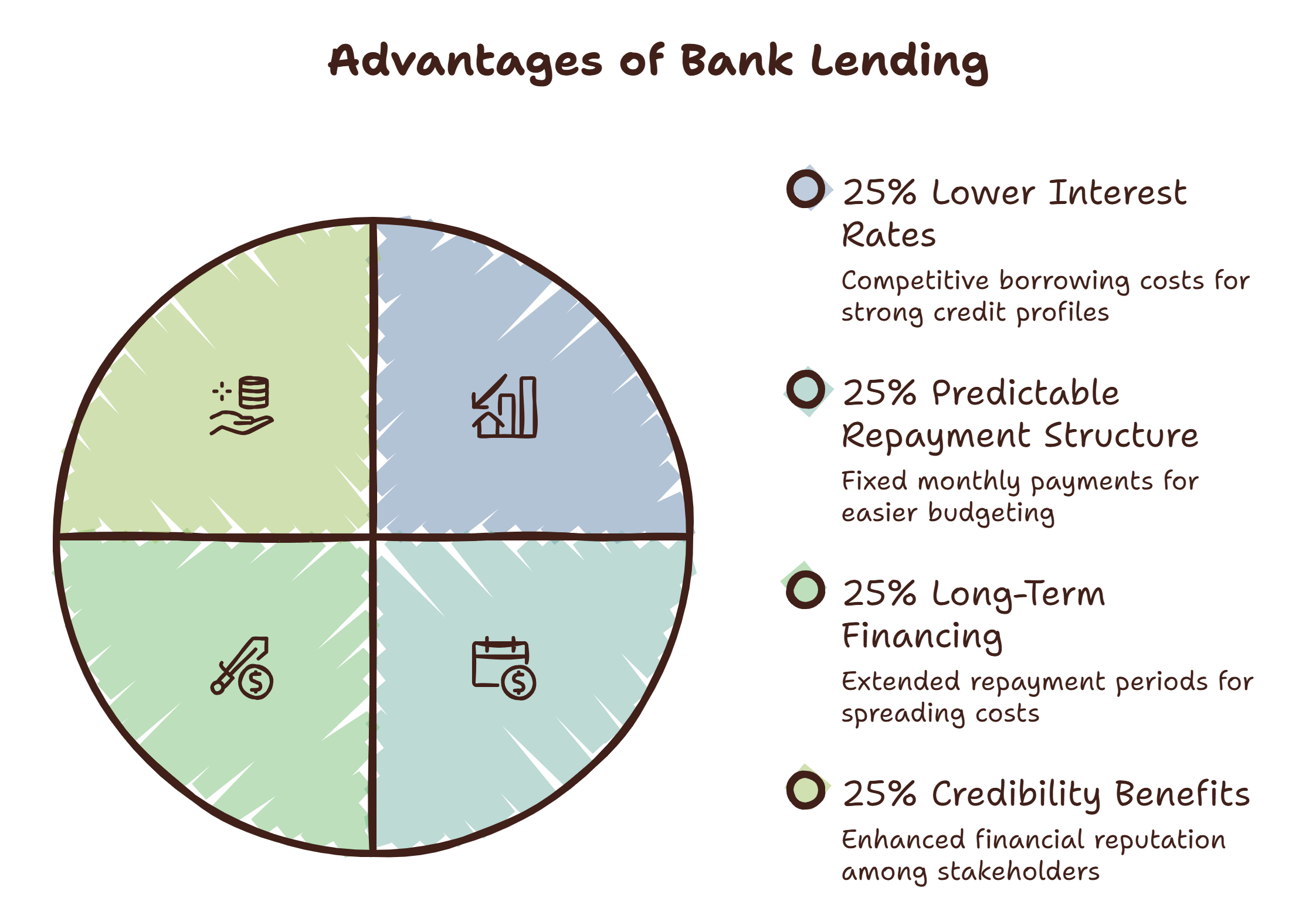
Advantages of Bank Lending
Lower Interest Rates
One of the biggest advantages of bank loans is their relatively low borrowing costs. Businesses with strong credit profiles often qualify for competitive rates.
Predictable Repayment Structure
Fixed monthly payments make budgeting easier and provide greater financial predictability.
Long-Term Financing
Banks often offer extended repayment periods, allowing businesses to spread costs over several years.
Credibility Benefits
Securing funding from a bank can enhance a company’s financial reputation among vendors, investors, and partners.
Challenges of Bank Lending
While traditional lending remains valuable, it presents several obstacles for growing businesses.
Strict Qualification Requirements
Banks generally require:
- Strong credit scores
- Consistent profitability
- Low debt levels
- Established operating history
Many startups and rapidly growing companies struggle to meet these criteria.
Slow Approval Process
Loan approval can take weeks or even months, which may delay important business opportunities.
Limited Flexibility
Bank loans often come with restrictions regarding how funds can be used and may include financial covenants that limit operational flexibility.
Reduced Accessibility During Economic Uncertainty
When economic conditions become uncertain, banks frequently tighten lending standards, making financing harder to obtain.
What Is Asset-Based Lending?
Asset-based lending (ABL) is a financing solution that allows businesses to borrow against the value of their assets rather than relying primarily on credit scores or profitability.
Common collateral includes:
- Accounts receivable
- Inventory
- Equipment
- Machinery
- Real estate
Instead of focusing exclusively on financial history, lenders evaluate the quality and value of business assets.
As a result, many companies turn to Asset Based Lending Services when traditional financing becomes difficult to obtain or insufficient to support expansion.
How Asset-Based Lending Works
An ABL lender assesses the value of eligible assets and advances a percentage of that value as working capital.
For example:
- Up to 90% of accounts receivable value
- 50% to 80% of inventory value
- A percentage of equipment or machinery value
As asset values increase, borrowing capacity can also grow, creating a financing structure that scales alongside the business.
Why Asset-Based Lending Has Gained Popularity
Recent economic uncertainty, supply chain disruptions, and inflationary pressures have increased demand for flexible financing solutions.
According to industry reports, the global asset-based lending market continues to grow as businesses seek alternative sources of working capital that provide faster access to funds and fewer restrictions than conventional loans.
Many businesses now view ABL as a strategic growth tool rather than simply a financing option of last resort.
Comparing Bank Lending and Asset-Based Lending
Approval Criteria
Bank Lending
Banks focus heavily on:
- Credit history
- Cash flow
- Profitability
- Debt-to-income ratios
A strong balance sheet is often required.
Asset-Based Lending
ABL lenders prioritize:
- Asset quality
- Accounts receivable strength
- Inventory value
- Equipment value
This approach allows businesses with temporary financial challenges to access capital despite weaker credit profiles.
Funding Speed
Bank Lending
Approval timelines often range from several weeks to several months.
Asset-Based Lending
Many lenders can complete underwriting and provide funding within days.
This speed can be critical when businesses face urgent opportunities or cash flow gaps.
Flexibility
Bank Lending
Traditional loans often include strict terms and usage restrictions.
Asset-Based Lending
ABL structures are generally more flexible and adapt to changing business needs.
As sales increase and receivables grow, available funding can increase automatically.
Borrowing Capacity
Bank Lending
Loan amounts are usually determined by financial performance and debt servicing capacity.
Asset-Based Lending
Borrowing limits are tied directly to collateral values, often allowing businesses to access larger amounts of working capital.
Accessibility for Growing Businesses
High-growth companies often experience cash flow challenges despite strong sales performance.
Because ABL financing is based on assets rather than historical profitability, it can provide greater access to growth capital during expansion phases.
Real-World Example: Manufacturing Company Expansion
Consider a manufacturing company experiencing a surge in customer demand.
The business needs:
- Additional inventory
- New equipment
- Increased staffing
Although revenues are growing rapidly, profits have not yet caught up due to expansion costs.
A traditional bank may hesitate to approve financing because of lower profit margins.
An asset-based lender, however, may view the company’s growing receivables and inventory as valuable collateral and provide immediate funding.
The result:
- Faster production
- Higher sales volume
- Improved customer satisfaction
- Accelerated growth
This example illustrates why many growing businesses increasingly rely on asset-based financing.
The Role of Accounts Receivable Financing
One of the most powerful forms of asset-based financing involves leveraging accounts receivable.
Outstanding invoices often represent significant untapped working capital.
By leveraging unpaid invoices, companies can access funds much sooner and use that capital to support daily operations, inventory purchases, and expansion initiatives.
This approach helps companies:
- Improve cash flow
- Meet payroll obligations
- Purchase inventory
- Accept larger contracts
- Fund growth initiatives
Many businesses work with AR Factoring Companies to convert unpaid invoices into immediate cash and maintain steady operations without taking on traditional debt.
When Bank Lending Makes More Sense
Traditional financing remains an excellent option under certain circumstances.
Bank loans may be ideal when:
- The company has strong credit
- Profitability is consistent
- Funding needs are predictable
- Long-term financing is required
- Borrowing costs are a primary concern
For mature businesses with stable financial performance, bank financing can provide affordable capital with structured repayment terms.
When Asset-Based Lending Is the Better Choice
ABL may be more suitable when:
Growth Is Outpacing Cash Flow
Rapid expansion often creates working capital shortages despite increasing revenue.
Credit Challenges Exist
Businesses recovering from temporary setbacks may still qualify based on asset values.
Seasonal Revenue Fluctuations Occur
Companies with seasonal demand can benefit from financing that adjusts alongside asset levels.
Immediate Funding Is Needed
Opportunities often require fast decisions and quick access to capital.
Existing Bank Credit Limits Have Been Reached
ABL can supplement or replace traditional financing when businesses need additional liquidity.
How Small Businesses Benefit from Alternative Financing
The financing landscape has evolved significantly over the past decade.
Many entrepreneurs now combine traditional lending with alternative funding strategies to optimize cash flow and growth potential.
For example, businesses seeking Small Business loans USA often discover that combining a bank facility with asset-based financing creates greater financial flexibility than relying on a single source of capital.
This hybrid approach allows businesses to:
- Diversify funding sources
- Improve liquidity
- Reduce financing constraints
- Support expansion plans
- Strengthen financial resilience
Industry Trends Driving Asset-Based Lending Growth
Several factors continue to fuel demand for ABL solutions:
Increased Economic Uncertainty
Businesses seek financing options that remain available even during changing market conditions.
Rising Interest in Working Capital Optimization
Companies are becoming more strategic about unlocking value from existing assets.
Digital Lending Technology
Technology has streamlined underwriting and accelerated funding timelines.
Supply Chain Challenges
Many businesses require additional working capital to maintain inventory levels and meet customer demand.
Greater Awareness
Business owners increasingly recognize that financing can be structured around assets rather than solely around profitability.
These trends suggest that asset-based lending will continue playing an important role in business growth strategies.
Key Questions to Ask Before Choosing a Financing Solution
Before selecting any funding option, business owners should evaluate:
- How quickly is capital needed?
- What assets are available as collateral?
- Is growth creating cash flow pressure?
- What repayment structure fits the business?
- Are funding needs short-term or long-term?
- How much operational flexibility is required?
Carefully answering these questions can help determine whether traditional bank financing, asset-based lending, or a combination of both is the best fit.
Conclusion
The debate between bank lending and asset-based lending is not about which option is universally better it is about which option best aligns with your business goals and financial circumstances.
Traditional bank loans remain an excellent choice for established companies with strong credit, predictable cash flow, and long-term financing needs. However, businesses facing rapid growth, seasonal fluctuations, cash flow gaps, or limited access to conventional credit often find that asset-based lending provides greater flexibility and scalability.
As modern businesses navigate increasingly competitive and unpredictable markets, financing solutions that adapt to growth can provide a significant strategic advantage. By understanding the strengths and limitations of each option, business owners can secure the capital needed to fuel expansion, strengthen operations, and seize new opportunities.
Ready to Unlock Growth Capital?
Whether you’re evaluating traditional financing options or exploring flexible asset-based solutions, the right funding strategy can transform your business’s growth potential. Contact State Financial today to discover customized financing solutions designed to improve cash flow, support expansion, and help your business achieve long-term success.