




Healthy sales do not always guarantee healthy liquidity. Many businesses regularly complete projects, deliver shipments, or provide services but still wait weeks before receiving payment. While customers benefit from trade credit, the business must continue paying wages, buying inventory, maintaining equipment, and covering operating expenses. This delay between billing and payment can slow growth, limit purchasing power, and create daily financial pressure. To stabilize operations, many companies turn to factoring, which converts unpaid receivables into immediate working capital.
Factoring allows a business to sell its outstanding invoices to a financial provider in exchange for a quick cash advance. Instead of waiting 30 to 90 days, the company gains access to funds within a short time. However, approval is never automatic. Lenders carefully study multiple risk indicators before deciding whether to fund invoices and the evaluation differs depending on whether the business requests spot factoring or contract factoring.
Spot Factoring vs Contract Factoring
Spot factoring involves selling a single invoice occasionally. Businesses use it when they face a temporary cash gap. There is no long-term commitment, and they can choose which invoices to submit.
Contract factoring is an ongoing financing relationship. The company regularly submits invoices and receives funding continuously. Because the lender sees payment patterns over time, approvals are usually faster and pricing often improves.
Spot arrangements require deeper scrutiny because the lender has no performance history to rely on. Contract programs allow underwriting to be based on trends rather than isolated transactions.
1. Customer Credit Quality The Primary Decision Factor
In factoring, the most important evaluation is not the borrower’s credit score it is the customer’s ability to pay.
When an invoice is funded, repayment comes from the customer who owes the money. Therefore lenders perform a full credit review of that customer. They typically examine:
- Commercial credit reports
- Vendor payment history
- Company financial stability
- Industry reputation
- History of disputes or delays
Large corporations, government agencies, hospitals, and established distributors are generally considered strong debtors. Smaller or unstable companies create higher risk.
A factoring accounts receivable company focuses on whether the debtor has both the financial capacity and the payment discipline to honor the invoice on time. Even a startup business may qualify for funding if its customers are reliable payers.
2. Accounts Receivable Aging Report
The next major document lenders review is the accounts receivable aging report. This shows how long invoices have been outstanding.
Typical categories include:
- 0–30 days
- 31–60 days
- 61–90 days
- Over 90 days
A healthy portfolio has most invoices within 30 days. A large percentage beyond 60 days signals collection problems. Older invoices may indicate customer dissatisfaction, billing errors, or weak payment practices.
The aging report helps lenders understand whether late payments are occasional or consistent.
3. Invoice Verification
Because invoices serve as collateral, lenders must confirm they are legitimate. This process is called verification.
The lender may:
- Review purchase orders
- Confirm delivery receipts
- Check contracts or service agreements
- Contact the customer directly
Only invoices representing completed and accepted work qualify for funding. If the product has not been delivered or the service has not been approved, the invoice cannot be financed.
Spot factoring usually requires stricter verification because the lender does not yet trust the transaction history.
4. Industry Suitability
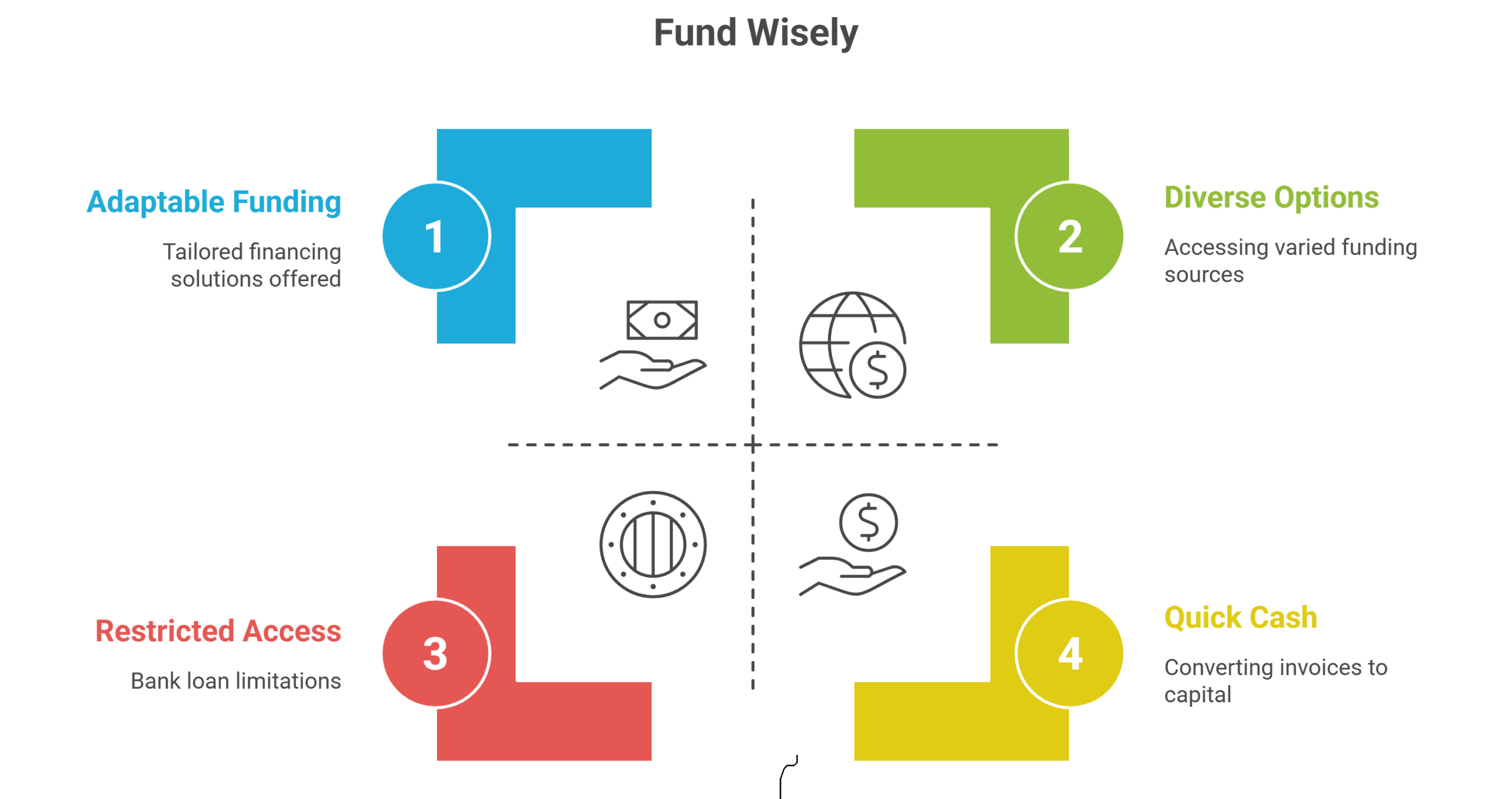
Factoring works best in business-to-business industries where sales are made on credit terms rather than immediate payment.
Commonly approved industries:
- Transportation and logistics
- Manufacturing
- Staffing agencies
- Wholesale distribution
- Commercial services
Less suitable industries:
- Retail shops
- Restaurants
- Consumer sales businesses
- Cash-based operations
The financing model depends on collectible receivables between businesses.
5. Customer Concentration
Lenders also evaluate concentration risk. This measures how dependent the company is on a single customer.
If one client represents most of the revenue, funding becomes riskier. Losing that customer could prevent repayment of financed invoices. Businesses with diversified customer bases are considered safer and typically receive better funding terms.
This is one of the main reasons receivables factoring companies often set limits on how much funding can be tied to one debtor account.
6. Advance Rate and Reserve
After approval, the lender determines the advance rate the portion of the invoice paid immediately.
Typical structure:
- 80% to 90% paid upfront
- Remaining balance held as a reserve
The reserve protects the lender from:
- Returns
- Short payments
- Credits
- Disputes
Once the customer pays the invoice, the reserve is released to the business minus the factoring fee.
Stronger customers and consistent payment patterns usually result in higher advances.
7. Recourse vs Non-Recourse
Factoring agreements are generally structured in two forms.
Recourse factoring:
The business must repurchase the invoice if the customer does not pay within the agreed period.
Non-recourse factoring:
The lender assumes credit risk if the customer becomes insolvent.
Non-recourse agreements require stricter credit analysis because the lender accepts greater financial exposure.
8. Contracts and Documentation
Lenders carefully review the agreement between the business and its customer. Contract terms directly affect whether an invoice can be funded.
They examine:
- Payment conditions
- Acceptance requirements
- Return policies
- Dispute clauses
Invoices must represent completed work with no remaining obligations. If payment depends on inspection, installation, or approval, the receivable may not qualify as collateral.
Clear documentation speeds approval and reduces risk.
9. Payment Terms and Behavior
Payment terms influence funding decisions. Shorter payment periods reduce risk because the lender’s money is outstanding for less time.
Preferred:
- Net-30
Higher risk:
- Net-60 or Net-90
Lenders also review actual payment habits. A customer who consistently pays late increases uncertainty and may result in higher fees or lower advance rates. Reliable payment history helps businesses receive better terms from invoice factoring companies.
10. Business Stability
Although factoring centers on the customer, lenders still review the business requesting funds.
They evaluate:
- Time in operation
- Management experience
- Legal history
- Tax liens or judgments
- Operational capability
The lender must be confident the business can continue generating invoices and fulfilling orders.
11. Invoice Volume and Consistency
For contract factoring, consistency matters. Lenders prefer businesses that produce invoices regularly rather than sporadically.
Predictable billing:
- Improves approval chances
- Leads to faster funding
- Often lowers costs
Irregular invoicing may still qualify but is often limited to spot factoring instead of a full program.
12. Fee and Pricing Determination
Once underwriting is complete, pricing is established. Fees depend on overall risk.
Key pricing factors:
- Customer credit quality
- Industry stability
- Payment speed
- Documentation strength
- Invoice size
Lower risk leads to lower fees and higher advance rates, while higher risk results in higher costs.
Why Spot Factoring Faces Stricter Review
Many businesses believe spot factoring is easier because it requires no contract. In practice, lenders analyze it more carefully.
Each invoice must stand on its own. Without historical performance data, lenders rely heavily on verification and credit checks. Missing paperwork or uncertain customers often delay approval.
Contract factoring, by comparison, builds trust over time and usually results in faster funding and better pricing.
Final Thoughts
Factoring is not simply quick financing it is a structured credit decision based on the collectability of receivables. Every funded invoice represents collateral, and the lender evaluates the probability of payment before advancing funds.
Businesses that maintain strong customers, organized receivable records, and clear agreements typically qualify quickly and receive favorable terms. When properly understood, factoring becomes more than a temporary solution; it becomes a dependable financial tool that supports steady operations, protects working capital, and enables long-term growth.