




Every growing business reaches a point where additional capital becomes necessary. Whether you’re purchasing inventory, expanding operations, covering payroll, or waiting for customers to pay outstanding invoices, having access to the right financing can make all the difference. The challenge isn’t simply finding funding. It’s choosing a financing solution that supports your business goals without creating unnecessary financial pressure.
A custom lending solution is designed around your company’s unique cash flow, assets, and operational needs instead of relying on a one-size-fits-all approach. While traditional loans remain a good option for some businesses, many companies benefit from financing that provides greater flexibility and faster access to working capital.
As demand for business financing continues to grow, the Small Business Loan in USA market offers more options than ever before. Understanding these options can help business owners make informed decisions and secure financing that supports both short-term needs and long-term growth.
Why Custom Lending Matters
No two businesses operate the same way, so their financing needs shouldn’t be identical either. A manufacturer waiting 60 days for customer payments has different funding requirements than a retailer preparing for seasonal demand or a service company hiring new employees.
Custom lending solutions are built to address these differences. Instead of focusing solely on credit history, many commercial finance providers evaluate the overall financial health of a business, including cash flow, accounts receivable, available assets, and future growth opportunities.
This flexible approach allows businesses to obtain financing that aligns with their operations while improving liquidity and maintaining financial stability.
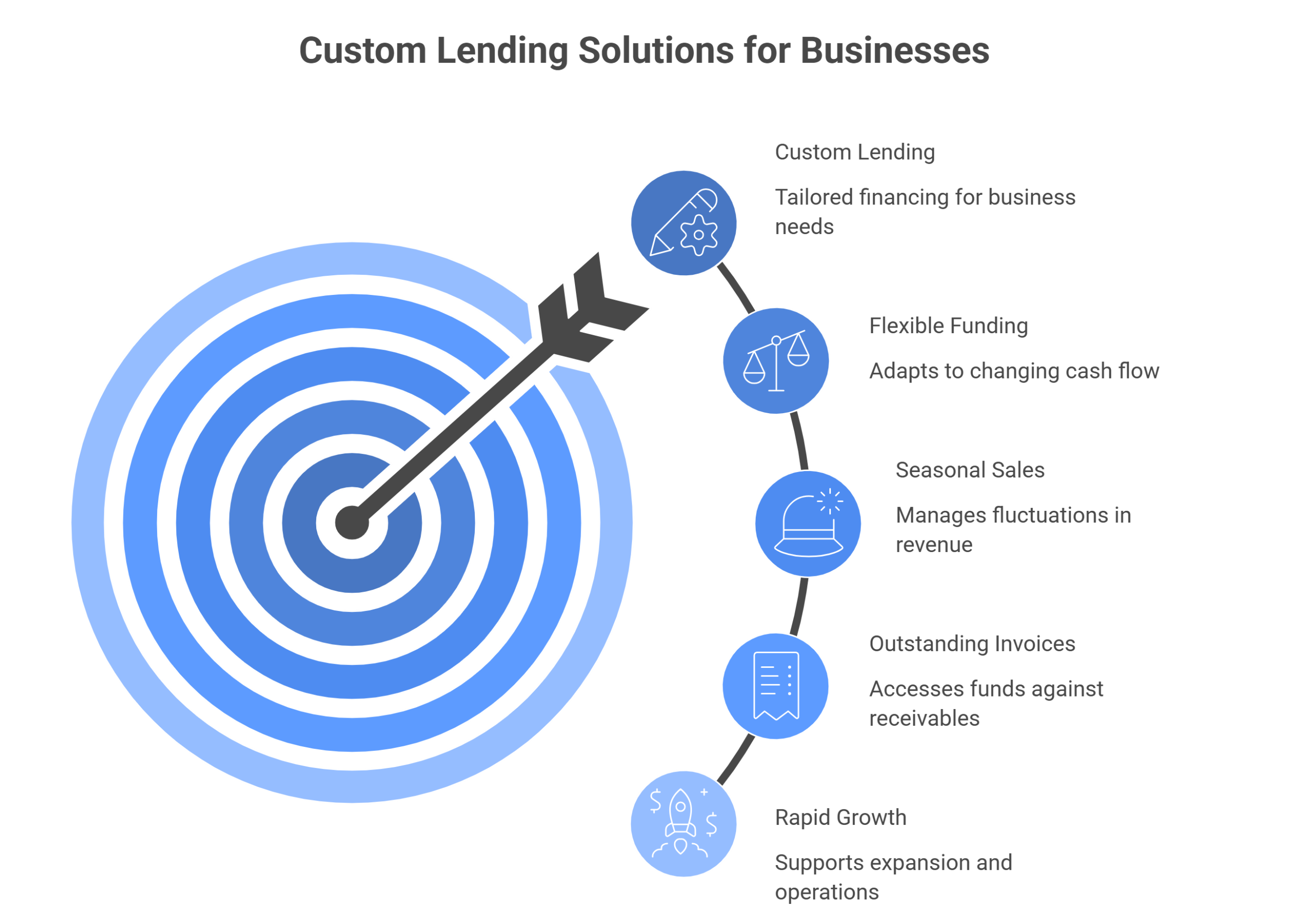
Who Can Benefit from a Custom Lending Solution?
Customized financing is especially valuable for businesses that experience changing cash flow or require flexible funding to support growth.
Businesses that commonly benefit include:
- Companies with seasonal sales fluctuations
- Manufacturers and distributors with outstanding invoices
- Businesses experiencing rapid growth
- Companies seeking additional working capital
- Businesses looking to improve cash flow without waiting for customer payments
- Owners who need financing tailored to their operations rather than a standard loan structure
For businesses with a significant amount of capital tied up in unpaid invoices, working with Factoring Companies in California provides a practical financing solution. Instead of allowing extended payment terms to slow operations, businesses can access funds against their receivables, helping maintain consistent cash flow while supporting payroll, inventory purchases, and business expansion.
Step 1: Define Your Financing Needs
Before comparing lenders, determine exactly why your business needs financing. Choosing the right product starts with understanding the purpose of the funds.
| Business Need | Recommended Financing Solution |
| Cover everyday operating expenses | Working Capital Financing |
| Improve cash flow tied up in invoices | Invoice Factoring or Accounts Receivable Financing |
| Purchase equipment | Equipment Financing |
| Support business expansion | Asset-Based Lending or Small Business Loan |
| Manage seasonal cash flow | Business Line of Credit |
Matching the financing solution to your specific business objective helps reduce borrowing costs while ensuring repayment remains manageable.
Step 2: Understand Your Financing Options
Today’s business owners have access to several financing solutions, each designed to address different operational needs.
Traditional Bank Loans
Banks generally offer competitive interest rates for businesses with strong credit histories, established financial records, and sufficient collateral. However, approvals often involve extensive documentation and longer processing times.
SBA Loans
SBA-backed financing provides attractive repayment terms for qualifying businesses. While these loans can be an excellent long-term financing option, they usually require detailed documentation and a longer approval process.
Commercial Finance Solutions
Commercial finance companies provide flexible financing that focuses on business performance and available assets rather than relying exclusively on traditional lending criteria.
Common financing options include:
- Accounts Receivable Financing
- Invoice Factoring
- Asset-Based Lending
- Working Capital Financing
- Equipment Financing
- Small Business Loans
These solutions help businesses access capital more quickly while improving cash flow and supporting continued growth.
A business with significant outstanding receivables, for instance, may benefit more from invoice factoring than a conventional term loan. Instead of waiting for customer payments, outstanding invoices become a source of immediate working capital, allowing the business to meet expenses, accept new projects, and continue expanding.
In the next section, we’ll explore how to compare lenders, evaluate financing terms, and choose a custom lending solution that supports your business both today and in the future.
The interest rate is important, but it shouldn’t be the only factor when selecting a custom lending solution. A lower rate doesn’t always mean lower borrowing costs if additional fees or restrictive repayment terms are involved.
When comparing lenders, consider the following:
- Total financing cost: Review origination fees, administrative charges, and any prepayment penalties.
- Repayment terms: Choose a repayment schedule that fits your business’s cash flow cycle.
- Funding speed: Some financing solutions can provide capital within days, while traditional loans may take several weeks.
- Collateral requirements: Understand whether financing is secured by receivables, equipment, inventory, or other business assets.
- Industry experience: A lender familiar with your industry can often recommend financing that better supports your operational needs.
Working with an experienced commercial finance provider can simplify the process and help you select the most suitable financing option.
Step 3: Compare Lenders Beyond Interest Rates
The interest rate is important, but it shouldn’t be the only factor when selecting a custom lending solution. A lower rate doesn’t always mean lower borrowing costs if additional fees or restrictive repayment terms are involved.
When comparing lenders, consider the following:
- Total financing cost: Review origination fees, administrative charges, and any prepayment penalties.
- Repayment terms: Choose a repayment schedule that fits your business’s cash flow cycle.
- Funding speed: Some financing solutions can provide capital within days, while traditional loans may take several weeks.
- Collateral requirements: Understand whether financing is secured by receivables, equipment, inventory, or other business assets.
- Industry experience: A lender familiar with your industry can often recommend financing that better supports your operational needs.
Working with an experienced commercial finance provider can simplify the process and help you select the most suitable financing option.
Step 4: Match the Financing Solution to Your Business
Every financing product serves a different purpose. Selecting the right one depends on how your business generates revenue and manages cash flow.
Businesses Waiting on Customer Payments
Companies that extend payment terms to commercial clients often have a significant portion of their working capital tied up in outstanding receivables. Rather than allowing delayed payments to restrict business operations, financing solutions such as invoice factoring and accounts receivable financing convert unpaid invoices into accessible cash. This improves liquidity, supports operational stability, and enables businesses to take on larger contracts without unnecessary cash flow constraints.
Growing Businesses
Expansion often requires additional funding for inventory, hiring, marketing, or larger customer orders. Asset-based lending and working capital financing provide flexible access to funds while supporting continued business growth.
Businesses Purchasing Equipment
When investing in machinery or equipment, equipment financing allows businesses to spread costs over time while preserving available cash for daily operations.
Seasonal Businesses
Retailers, distributors, and other seasonal businesses frequently need additional capital before peak sales periods. Flexible financing helps maintain inventory levels, cover operating expenses, and prepare for increased customer demand.
Common Mistakes to Avoid
Choosing financing without careful evaluation can lead to unnecessary costs and cash flow challenges. Avoid these common mistakes:
- Selecting the fastest approval instead of the financing solution that best fits your business.
- Comparing only interest rates while overlooking fees and repayment terms.
- Borrowing more than necessary without a clear business purpose.
- Ignoring how repayment schedules affect monthly cash flow.
- Choosing a lender without experience in commercial financing.
Taking time to compare financing options can help your business secure capital that supports sustainable growth rather than creating financial strain.
Conclusion
Choosing the right custom lending solution is about more than securing capital. It’s about finding financing that supports your cash flow, strengthens daily operations, and helps your business grow with confidence.
Traditional loans remain a valuable option for many businesses, but they aren’t the only solution. Flexible financing options such as invoice factoring, accounts receivable financing, asset-based lending, and working capital financing can provide faster access to funds while addressing the unique financial needs of your business.
Before making a decision, evaluate your financing goals, compare lenders carefully, and understand the total cost of borrowing. Partnering with an experienced commercial finance provider can help you secure funding that aligns with your business objectives and positions your company for long-term success.
Frequently Asked Questions
What is a custom lending solution?
A custom lending solution is financing tailored to a business’s specific needs, cash flow, and available assets instead of offering the same loan structure to every borrower.
How do I know which financing option is right for my business?
Start by identifying your financing goal. Businesses seeking immediate cash flow often benefit from invoice factoring or working capital financing, while long-term investments may be better suited for equipment financing or traditional business loans.
Is invoice factoring the same as a business loan?
No. Invoice factoring allows businesses to access cash by selling outstanding invoices, while a business loan provides borrowed funds that are repaid according to agreed terms.
Can newer businesses qualify for financing?
Yes. Many commercial financing solutions consider business performance, receivables, available assets, and cash flow rather than relying solely on credit history.
Where can businesses find financing in California?
Businesses exploring Small Business Loans California have access to banks, SBA lenders, and commercial finance providers offering flexible solutions such as invoice factoring, asset-based lending, working capital financing, and accounts receivable financing.